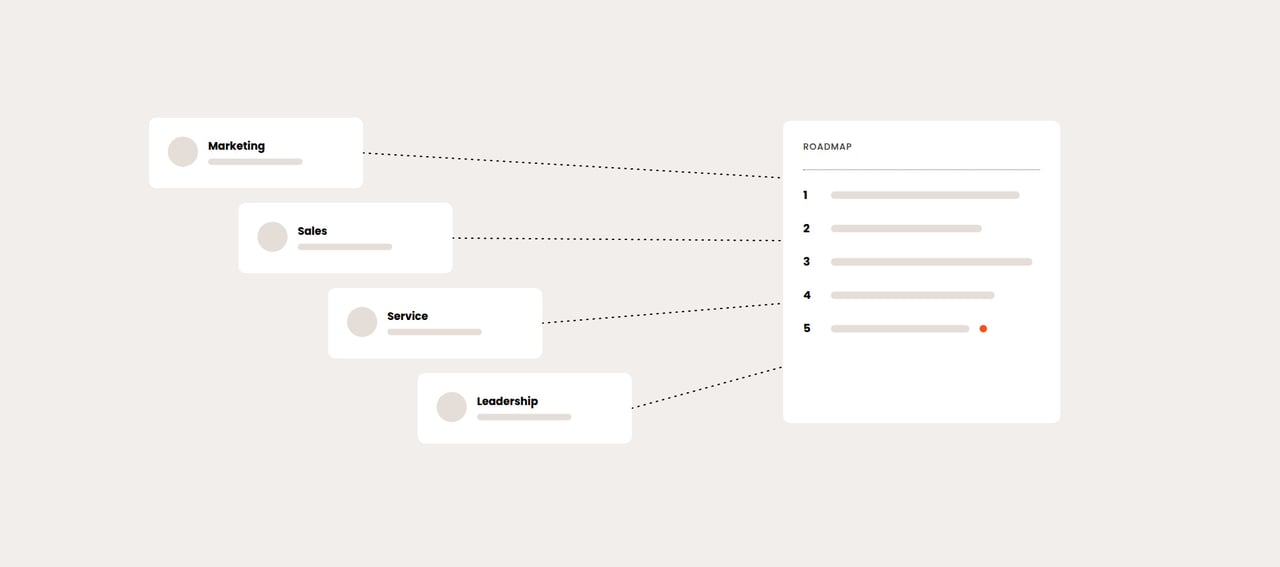
Our onboarding and discovery starts with understanding how your business actually works: your definitions, processes, team structures, ways of working and goals. Through stakeholder interviews and an audit of your systems, data and content, we agree a scoped, prioritised roadmap before any implementation begins. You get a brief, agreed definitions, audit findings and a roadmap.
This explains what happens in the first weeks of working with Zooma, for leaders who want to know what they are signing up for. I run this phase as a project manager, and the format scales with the size of the engagement.
Why does discovery come first?
Discovery comes first because the most expensive mistakes are made before anyone opens HubSpot. When a setup doesn't match how a company works, the problems surface months later as poor adoption and unreliable data. I've seen clients come to us after earlier implementations where exactly that happened, which is why understanding the business and its needs upfront is so important.
What happens in discovery? Five steps
Our onboarding starts with understanding how the client's business actually works — their definitions, processes, team structures, ways of working, and how teams collaborate. We also look at both short- and long-term goals, including why they chose HubSpot in the first place and what they expect from our support, so we can build the right approach from the start.
In practice that becomes five steps. Each one produces something you can review and keep.
| Step |
What we do |
What you get |
| 1. Clarify the outcome |
Agree what should change and why, including why you chose HubSpot and what you expect from us |
A shared brief with goals and expected outcome |
|
2. Understand stakeholders
|
Structured conversations with marketing, sales, service and leadership |
A picture of how work really flows, and where it breaks |
| 3. Audit systems, data and content |
Review your tech stack, CRM data and content against what people assume is there |
A factual baseline |
| 4. Map definitions and ways of working |
Document terms like lead and customer, handovers and ownership of data and tasks |
Agreed definitions and gaps |
| 5. Agree the roadmap |
Prioritise and sequence the work, with responsibilities |
A scoped roadmap with deliverables and outcomes |
Step 3 in particular is key because the audit shows what is actually there versus what people assume. Those two pictures are rarely the same.
Discovery should also look at the people affected by the change, not only the systems, because they decide whether it succeeds.
Real discovery vs. warning sign
Not every partner's discovery is the same. Use this to tell the difference, alongside how to choose the right HubSpot partner.
| Area |
Real discovery |
Warning sign |
| Who is involved |
People who do the daily work, plus leadership |
Only the project sponsor or selected departments |
| What is reviewed |
Your actual systems and data that stand for your infrastructure |
A questionnaire and a demo |
| Definitions |
Written down and agreed across teams |
Assumed or team-specific |
| Output |
A prioritised roadmap you could use with any partner |
A proposal for the partner's standard package |
| Honesty |
Says when the problem isn't HubSpot |
Every answer is more HubSpot |
Questions to ask: "Who from our team will you engage with, and how will you check what's really in our systems?"
Questions to ask: "What will we have in hand at the end of discovery, even if we stop there?"
What should you bring?
Bring time from the right people, more than documents. The most useful inputs are:
- Access to your current systems, so we can see the real setup.
- A sponsor in leadership who owns the outcome and has the mandate to make decisions.
- One person from each team who knows the day-to-day work.
- Your goals, including targets already set for the year.
- Existing customer knowledge, such as surveys, win/loss notes or NPS feedback.
The takeaway: the quality of discovery depends on honest access to how work really happens, not on polished documentation.
Where this applies, and where it doesn't
- Small, well-defined tasks, such as a single integration, need only a short scoping conversation, not full discovery.
- Rebuilds of an existing HubSpot setup put more weight on step 3, the audit.
- Multi-market companies need step 4 for each market, plus agreement on what is global vs. local.
- If leadership isn't involved, discovery can still map the problems, but the roadmap risks stalling.
Actionable takeaways
- Before kickoff: Name a sponsor and one representative from each team.
- Before kickoff: Write down why you chose HubSpot and what you expect from a partner.
- During discovery: Make sure conversations include the people who do the daily work, not only managers.
- At the end: Review the roadmap and challenge priorities before you approve the build.