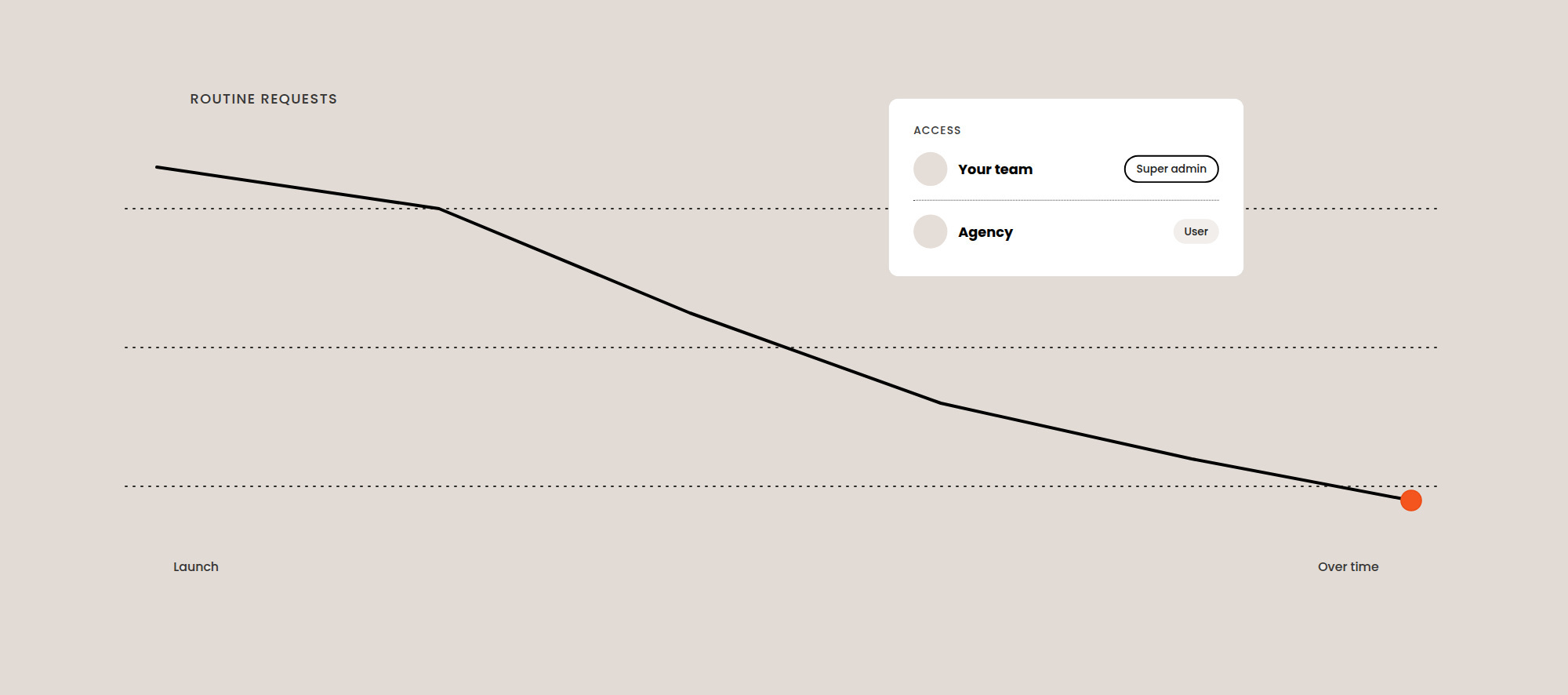
You avoid long-term agency dependency by building four practices into the scope from day one: agree what your team will own, document as the work is built, train your people on real tasks during the project, and measure whether you need the agency less over time. Ongoing support should then be a choice, not a necessity.
This is for buyers in the final stage who want to know how an agency protects them from lock-in. I'll describe how we work at Zooma, so you can hold us, or anyone else, to it.
Why is dependency a real risk in 2026?
Dependency is a real risk because platforms like HubSpot now sit at the centre of how marketing, sales and service work. If only the agency understands your setup, every change, from a new form to a new pipeline stage, goes through them. That slows you down and costs money every month.
The four practices to demand
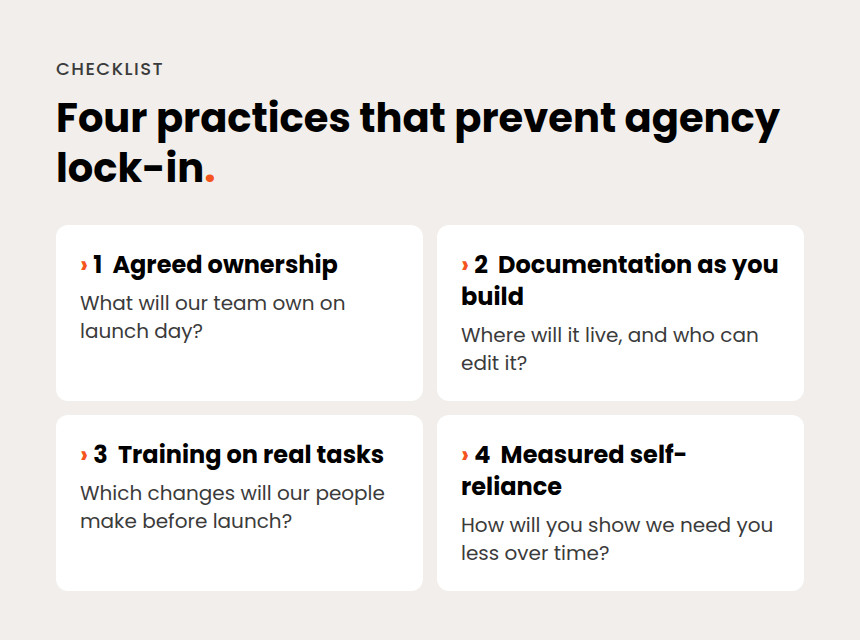
One of our goals is to make customers self-reliant by designing systems that their teams can actually learn to maintain themselves. That comes down to four practices. Ask for each one by name in the proposal.
1. Agreed ownership
Before the work starts, agree which parts your team will run day-to-day and which may need occasional expert help. This practice is about building access, documentation and practical knowledge transfer into the work itself.
Questions to ask: "What, specifically, will our team own on the day of launch?"
2. Documentation as you build
Decisions, processes and naming conventions are written down in your own systems while the work happens, so the knowledge stays with you when people change.
Questions to ask: "Where will the documentation live, and who can edit it?"
3. Training on real tasks, during the project
Stellan Björnesjö puts it this way about how an enablement partner differs from a typical HubSpot partner: we train your team as we build rather than afterwards, and design workflows your people can maintain and extend.
Questions to ask: "Which real changes will our people make themselves before launch?"
4. Measured self-reliance
We measure part of our success by how quickly you stop needing us for routine changes, one of the measures in how to measure success in a B2B enablement engagement.
Questions to ask: "How will you show us that we need you less over time?"
Self-reliant partner vs. dependent partner
| Practice | Self-reliant partner | Dependent partner |
|---|---|---|
| Ownership | Named internal owners for each area | "We'll take care of it for you" |
| Documentation | Written in your systems, readable without help | Lives only with the agency |
| Training | Your people make real changes during the project | One demo session at the end |
| Access | Your company owns accounts and admin rights | The agency holds the admin rights |
| Measurement | Routine requests reduce after launch | Every small change needs a ticket |
The takeaway: you are self-reliant when your team handles the foundation and the day-to-day basics without help.
What should the agency still be there for?
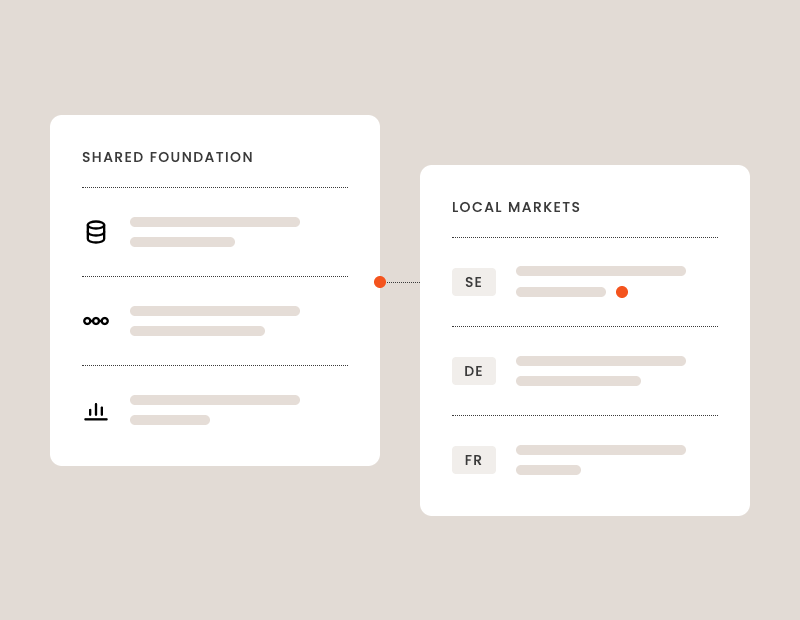
The agency should still be there for work that needs expertise or extra hands: strategic support, enhancements, new capabilities, onboarding new markets or teams, and peaks in workload. The foundation and day-to-day basics should be something your team can handle. The aim is to make customers less dependent on us over time, not more.
Where this applies, and where it doesn't
- If you have no internal owner, self-reliance can't happen. Appoint one before the project starts.
- Complex integrations or custom code may reasonably stay with a specialist. Decide that consciously.
- If your team can't take part in the project, plan for more support afterwards.
- Self-reliance doesn't mean doing everything alone. It means choosing when to use help.
Actionable takeaways
- Before signing: Ask the four questions above and compare the answers across agencies.
- In the contract: Make documentation, training and admin ownership explicit deliverables.
- During the project: Give your internal owners real tasks every week.
- After launch: Track how many routine requests still go to the agency, and why.