
- Learn
- The B2B Enablement Hub
- Cold outreach is never step one—it's step three
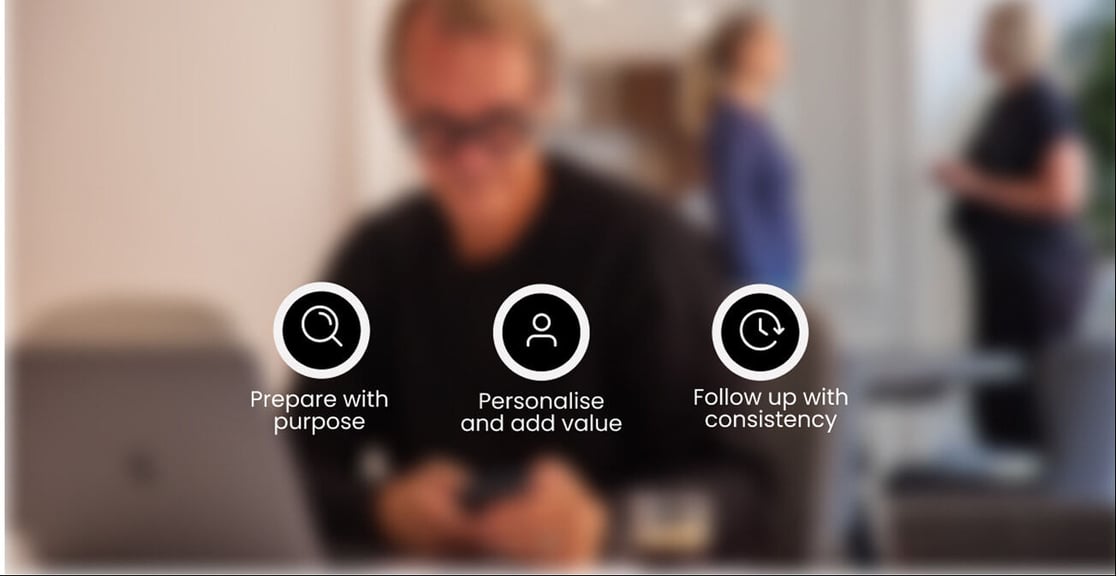
Cold outreach in B2B often falls flat—not because of poor writing or bad timing, but because it’s mistakenly treated as the starting point of a relationship. Whether it's via email, a LinkedIn message, or a phone call, prior research and engagement should inform your outreach, not be the initial step. Practical outreach tests whether you’ve done your homework, earned attention, and have something relevant to offer.
Here are my thoughts on building an outreach process that generates responses. It's broken down into what to do before, during, and after outreach, with practical examples.
Step one: Prepare with purpose
Before reaching out, gather context to ensure your message is not only personal but genuinely relevant.
What to do:
Define your ICP and persona pain points
- Understand your target audience beyond job titles by identifying their priorities, pressures, and problems.
Research the individual and the company
- Explore LinkedIn profiles, company pages, recent news, funding announcements, or hiring patterns to gain insights.
Spot a signal
- Look for recent activities such as job changes, company growth, team expansion, or new technology implementations that signal potential needs.
Refine your reason
- Be ready to explain "Why now?" and "Why you?" to demonstrate the importance and timing of your outreach.
Step two: Personalise and add value
Once you’ve earned the right to reach out, make your message count by being specific and offering genuine value.
What to do:
Lead with something specific
- Mention a shared connection, their post, or something unique to them.
Offer insight—not a pitch
- People respond to relevance, not rehearsed product blurbs.
Be a human
- Avoid robotic intros or complex jargon.
Make it easy to say yes
- Ask one straightforward, non-intrusive question or make an invitation.
Step three: Follow up with consistency, never with pressure
Even significant outreach often goes unanswered at first. Brilliant follow-up builds familiarity and trust without being annoying.
What to do:
Always add something new
- Instead of simply "bumping" the last message, bring fresh value or context to each follow-up.
Engage in parallel
- Comment on their posts, reference something they've shared, or simply show up in their world to build rapport.
Stay structured
Use your CRM (Customer Relationship Management) system to track what you've tried and what resonated, ensuring a coherent follow-up strategy.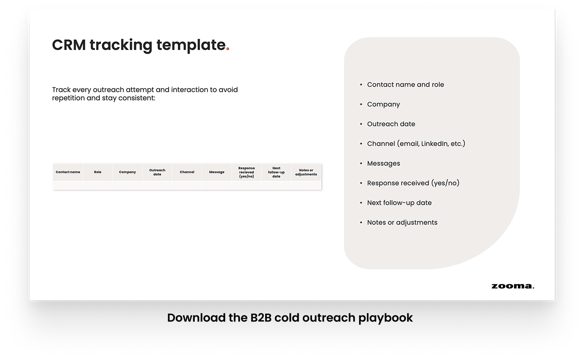
The best outreach is earned, not sent
If your outreach feels cold, it’s probably too early—or too generic.
Real outreach is built on curiosity, context, and care. It’s not about pushing your solution. It’s about demonstrating your relevance and giving the recipient a reason to care.
You’re not asking for time—you’re proving you’re worth a response.
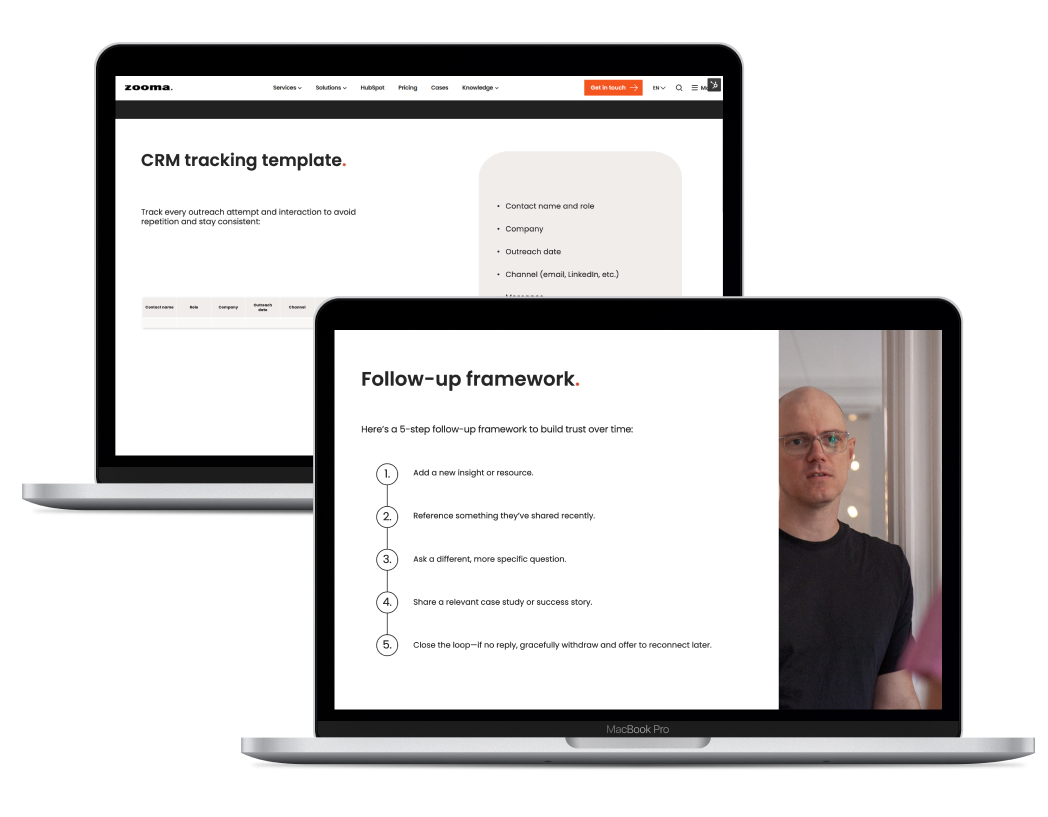

Templates and checklists!

