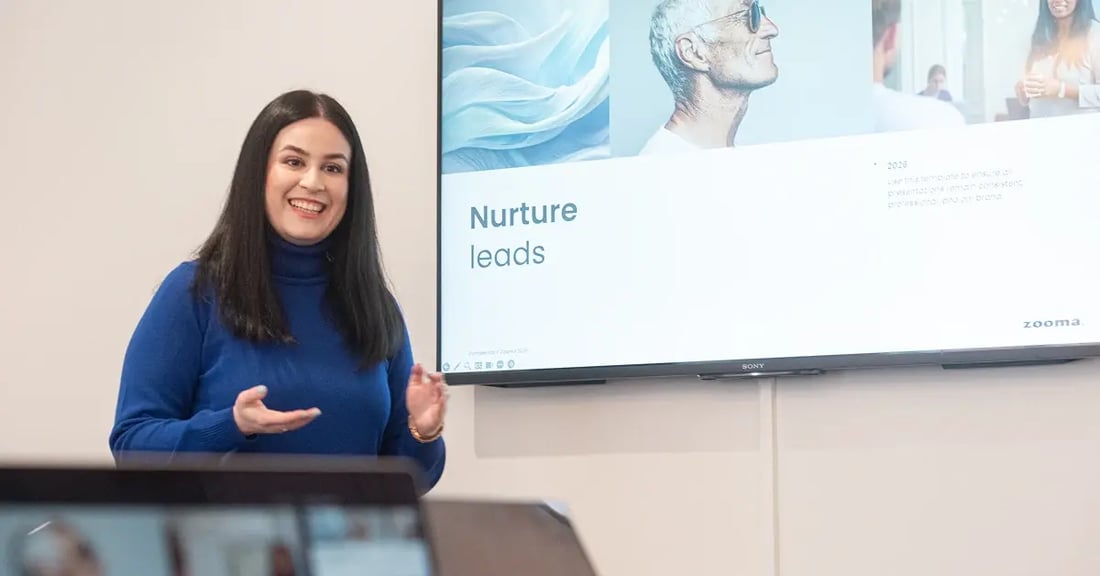
Before we travelled to HubSpot's UNBOUND event in Boston, a customer asked us two questions: Is it advisable to invest in lead nurturing workflows when so much of the buying journey happens on other platforms? And while we build for AI, where, how and how much should we keep building directly for people? This article hopefully answers her and others asking the same questions.
We took those questions with us to Boston. They gave us a useful lens for thinking about AI, buyer behaviour, and the future of marketing. Nothing new in saying that B2B buying behaviour is changing. The more useful discussion is what we should change in response—and which practices still deserve our attention.
My view is that lead nurturing workflows still have a role. So does content created for people. Their value depends on how well they support what customers are actually trying to do.
Your workflow represents part of the relationship
A buyer might encounter your company through a colleague, read an expert’s LinkedIn post, ask an AI assistant to compare approaches and discuss the options internally before visiting your website. The activity you see in your CRM is only part of that process.
A download tells you that someone has downloaded something. It doesn’t, on its own, tell you how far their organisation has progressed, who else is involved, or whether they want to have a sales conversation. That matters when designing lead nurturing.
If someone downloads a technical guide, what’s a genuinely useful next step? It could be a practical example, an explanation of implementation requirements or an opportunity to ask a specialist a question.
A predetermined sequence becomes less useful when you treat each action as evidence that the buyer is ready for the next commercial step. I would use lead nurturing workflows to respond to known needs, coordinate follow-up and make useful support easier to deliver. I would be careful not to expect them to describe—or control—the entire buying journey.
Existing and desired customers need different approaches
This distinction is central to how I would answer the customer’s first question. With existing customers, there is often a foundation of shared knowledge: what they bought, what they want to achieve, who is involved and what has already happened. That gives automation something meaningful to work with.
Relevant guidance during onboarding, training for a new user group, or reminders to review agreed outcomes can support the relationship. The usefulness comes from the customer context behind the activity.
For desired customers, that context may be much thinner. Our first task is to understand which companies we want to work with, which situations make us relevant and where the people involved seek advice. That could mean contributing expertise through personal LinkedIn profiles, participating in relevant professional communities, or publishing explanations that people can find through search and AI tools. Reddit may matter for some audiences; other communities may matter much more.
The choice should reflect the customer’s behaviour. An ideal customer profile should help us make those choices, not just define who enters a nurture sequence.
Keep building for people—and make the knowledge accessible to AI
I would not start by allocating a percentage of the content budget to humans and another percentage to AI. I would start with the questions we need to answer.
Can the customer understand their options? Can they assess the risks? Can they explain the recommendation to colleagues? What evidence would help them feel confident enough to act? Those are human needs.
Making the answers clear, current, and well supported also gives us a better foundation for making that knowledge accessible to AI. But accessibility alone does not establish usefulness or accuracy. We still need to verify what is being retrieved and whether the resulting answer preserves the context.
Some situations also require direct interaction: a demonstration, a difficult implementation discussion, a workshop, or a conversation about competing priorities. The practical question is where self-service information helps and where someone needs access to an expert who understands their situation.
Your company’s knowledge needs to travel
Some of your most useful knowledge may sit with the people delivering the work. An implementation specialist knows where projects stall. An account manager understands why customers hesitate. A service colleague knows which misunderstandings repeatedly cause problems. That experience deserves a place in your communication.
Imagine a potential customer forwarding your explanation to their management team. Would it make sense without you in the room? Would the evidence travel with the claim? Would it explain the assumptions and limitations? This is a useful test because your contact may need to defend a recommendation to people you have never met.
It also changes the content brief. “Write an article about our solution” becomes “Help this person explain whether the solution fits their situation, what it would require and why the recommendation is credible.”
Start with one decision, then connect the work
For a practical starting point, I would choose one important decision for a prioritised customer group. For example: Can we introduce this solution without disrupting our existing operations? Then examine how you support that decision today. What can someone find publicly? What knowledge remains inside the company? Which claims need stronger evidence? Where would a conversation help? What follow-up could a workflow usefully coordinate?
This brings customer understanding, content, channels, CRM and automation into the same discussion. It may reveal a need for new material. It may also reveal that the answer already exists but is scattered, outdated or difficult to use. That is the connection I want us to make at Zooma: understand what matters to the customer, make the relevant knowledge useful and apply technology where it improves the experience.
Measure whether you helped someone move forward
Traffic, downloads and email engagement can provide useful signals. I would also want to know which questions remain unanswered, whether customers can use our evidence internally and whether our follow-up reflects their circumstances.
So, to the customer who asked before the trip: I hope this response answers your two questions.
Yes, I would continue investing in lead nurturing workflows where we have a clear reason to believe they will help. I would also invest in making our expertise accessible wherever relevant customers look for answers—whether through people, platforms, search, or AI.
In both cases, people’s decisions should remain at the centre of our work. The standard is whether our knowledge and actions help customers take their next step with greater confidence.
Thank you for giving me two useful questions to take to Boston. If this answer helps you—and perhaps others considering the same issues—the questions have already travelled further than either of us expected. And I would keep people’s decisions at the centre of both efforts. The standard is whether our knowledge and actions help customers take their next step with greater confidence.