Zooma's client Net Promoter Score (NPS) was +93 in May 2026. That is a useful indicator of the partnership experience, but it doesn't prove business results on its own. When choosing an agency, use NPS alongside the survey method behind it and conversations with references in similar situations.
I’m writing for buyers who are comparing agencies in the final stage. I’ll explain what our number means, how we measure it, and, just as importantly, what it can’t tell you.
Why do buyers ask for NPS in 2026?
Buyers ask because agency marketing has converged. Most agencies describe themselves as strategic, partner-minded, and results-driven, and buyers need a way to test those claims. A published, recurring client NPS is one of the few comparable signals available before signing.
What NPS should you expect from a B2B agency?
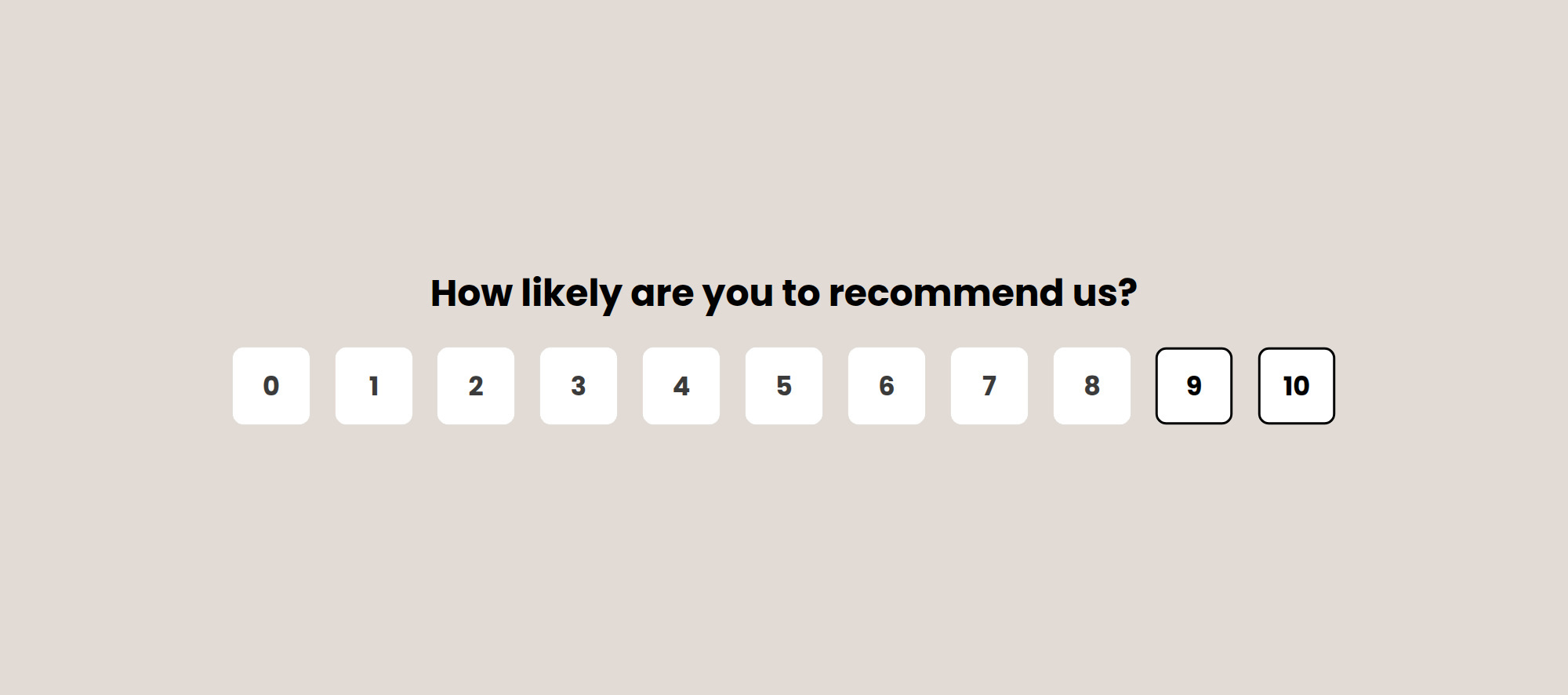
You should expect a clearly positive score, and the agency should explain how it was measured. NPS asks clients how likely they are to recommend the company, on a scale of 0 to 10. Scores of 9–10 count as promoters and 0–6 as detractors. NPS is the percentage of promoters minus the percentage of detractors, so it ranges from −100 to +100.
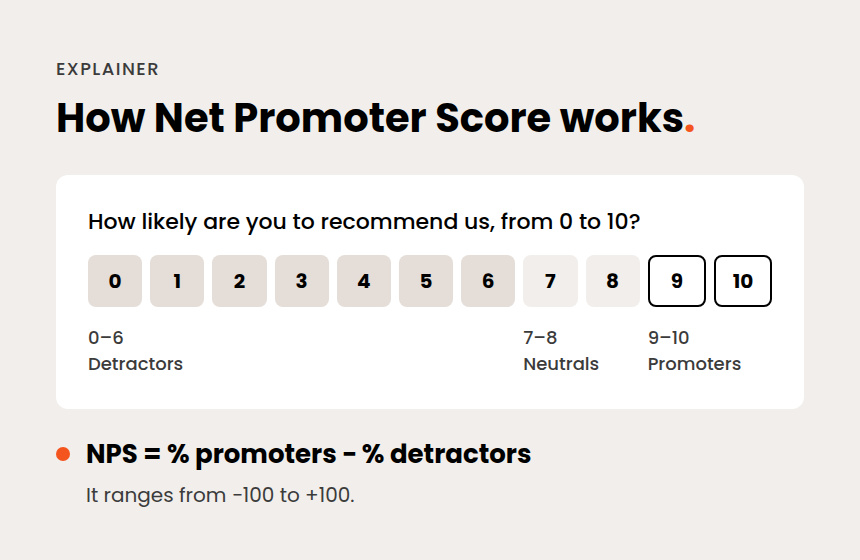
Any positive score means more promoters than detractors. Scores above +50 are generally considered strong. But the method matters more than the headline: who was asked, how many answered and whether the score holds over time.
What does Zooma’s +93 mean?
A client NPS of +93 means almost every responding client would actively recommend us, and practically none would warn against us. We track it consistently across clients, not just our best-known accounts.
| Figure | What it measures | Period |
|---|---|---|
| Client NPS +93 | How likely clients are to recommend Zooma | May 2026 |
| Employee NPS +89 | How likely Zooma's employees are to recommend Zooma as a workplace | H1 2026 |
We also publish employee NPS, because the people working on your account shape your experience. Teams that like their work tend to stay, and continuity matters in long engagements.
Isn’t NPS just a vanity metric?
It can be. To be fair to the counter-view, NPS is easy to inflate by surveying only happy clients, and a high score says nothing about whether an agency moved your pipeline. Anyone choosing a partner on NPS alone is choosing on mood.
That's why it should never stand alone. NPS shows how clients experience communication, reliability, competence and fit. Those predict whether an engagement will be sustained. They are not revenue.
The takeaway: treat NPS as evidence of how a partner works with clients, and ask for business outcomes and references separately.
How should you use NPS when choosing a partner?
Use it as one of three tests:
- The score and its context. When it was measured, how many clients responded, and whether you asked all clients.
- References. Clients with a similar challenge who can describe the work and the results.
- Outcome evidence. Cases with a starting point, what was done and what changed.
We are happy to share our survey method and, with permission, connect you with references.
Where this applies, and where it doesn’t
- Small agencies with few clients can have volatile NPS. Ask how many responses a score is based on.
- One high score means less than a consistent trend over several years.
- NPS doesn’t compare well across agencies that survey differently. Ask about the method before comparing numbers.
- Your experience will depend on the team. Ask to meet the people who would work with you.
Actionable takeaways
- When shortlisting (low effort). Ask every agency for its latest client NPS, including the date and method.
- When comparing (low effort). Verify whether all clients or only selected clients were surveyed.
- Before deciding (medium effort). Speak to at least one reference with a challenge like yours.