
- Learn
- The B2B Enablement Hub
- How do you measure AI search visibility in HubSpot?
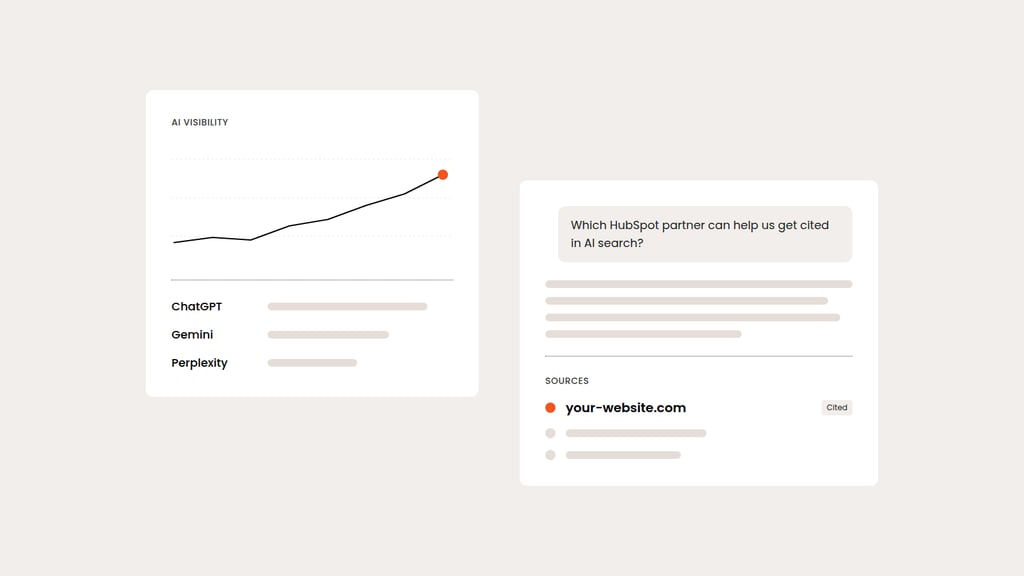
Short answer: Measure AI search visibility in three layers. First, are you named in the AI answer? HubSpot AEO tracks this. Second, do people click through? The AI Referrals source in HubSpot's traffic analytics shows it. Third, do those visits become a pipeline? That is answered by tying AI referrals to contacts and deals in the CRM. Most companies only look at the second layer, and it is the least reliable of the three.
In our UNBOUND 2026 recap, we covered why this matters: organic traffic is falling while AI-referred visitors convert at more than twice the rate. This article is the practical follow-up. It covers what to measure, where to find it in HubSpot, and how to turn the numbers into decisions.
Why don't your traffic numbers tell the whole story anymore?
Because most AI answers never produce a click. A buyer can ask ChatGPT for the best partners in your category, get your name, and then type your URL directly. In your reports, that visit shows up as direct traffic, if it shows up at all.
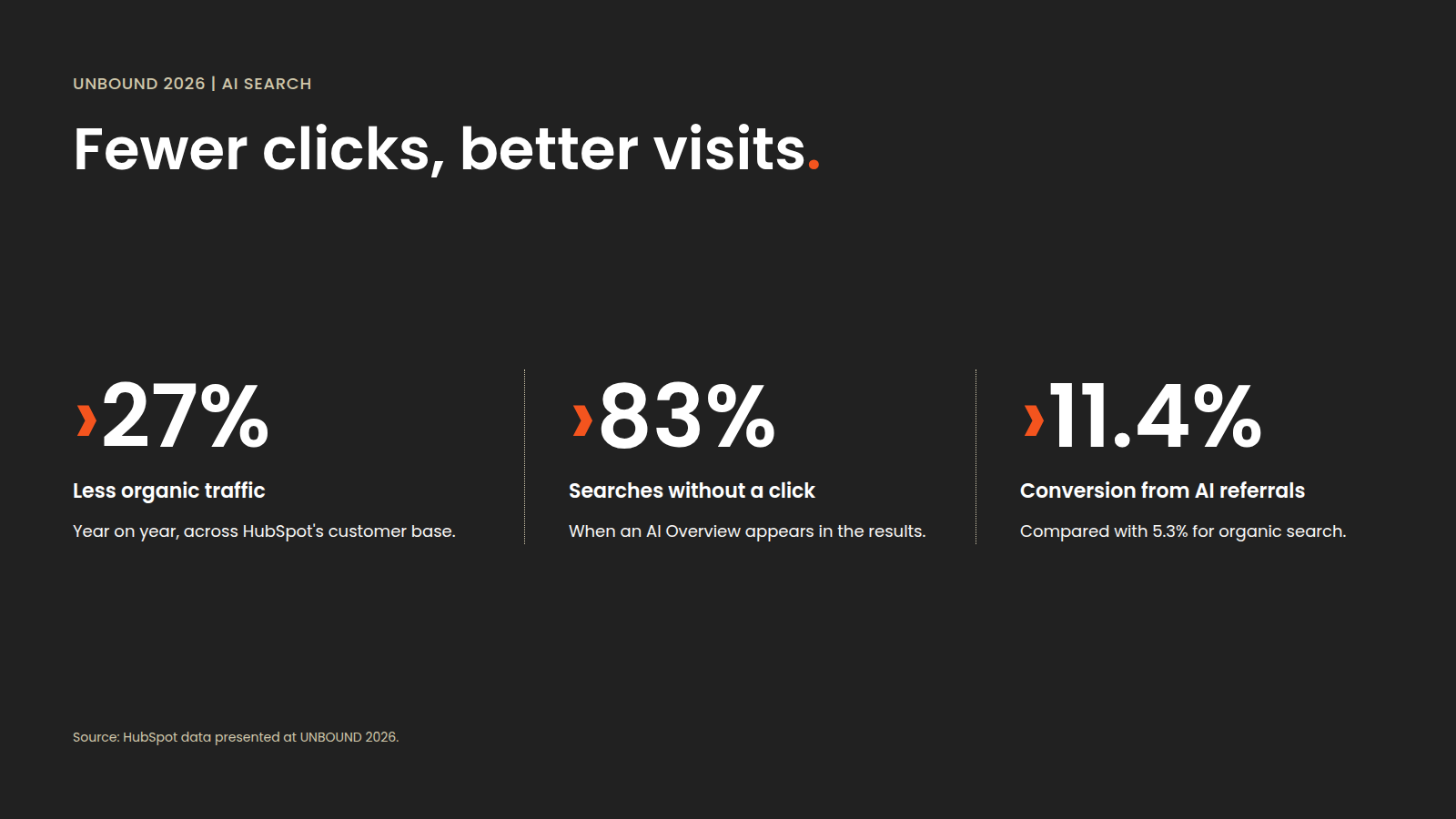
At UNBOUND 2026, HubSpot presented data showing organic traffic down 27% year on year across its customer base, and 83% of searches ending without a click when an AI Overview appears. Yet AI-referred visits converted at 11.4%, compared with 5.3% for organic search. Fewer visits, better visits, and most of the influence is invisible in a traffic chart.
There is also a technical gap. HubSpot and Google Analytics 4 attribute sessions differently: HubSpot credits the first touch, GA4 the last non-direct click. Some AI apps also open links in an in-app browser that strips the referrer. So you will see different numbers in each tool, and both will undercount.
When I wrote about the most important SEO ranking factors in 2018, the job was to rank among ten blue links. Today, the job is to be one of the few sources an AI model names. That needs a different way of measuring.
What should you measure? A three-layer model
I use a simple model with clients. Each layer answers one question, and each one needs its own data source.
|
Layer |
Question it answers | Where to find it in HubSpot | Main metric |
|---|---|---|---|
| 1. Visibility | Are we named in AI answers to our buyers' questions? | HubSpot AEO (or the free AI Search Grader for a one-off check) | Visibility score, share of voice against competitors, cited sources |
| 2. Traffic | Do people click from AI tools to our site? | Traffic analytics, source: AI Referrals | Sessions and conversion rate from AI referrals, by page |
| 3. Pipeline | Does AI-driven interest become business? | Contacts and deals with AI Referrals as the original source | Contacts, deals and deal value influenced by AI referrals |
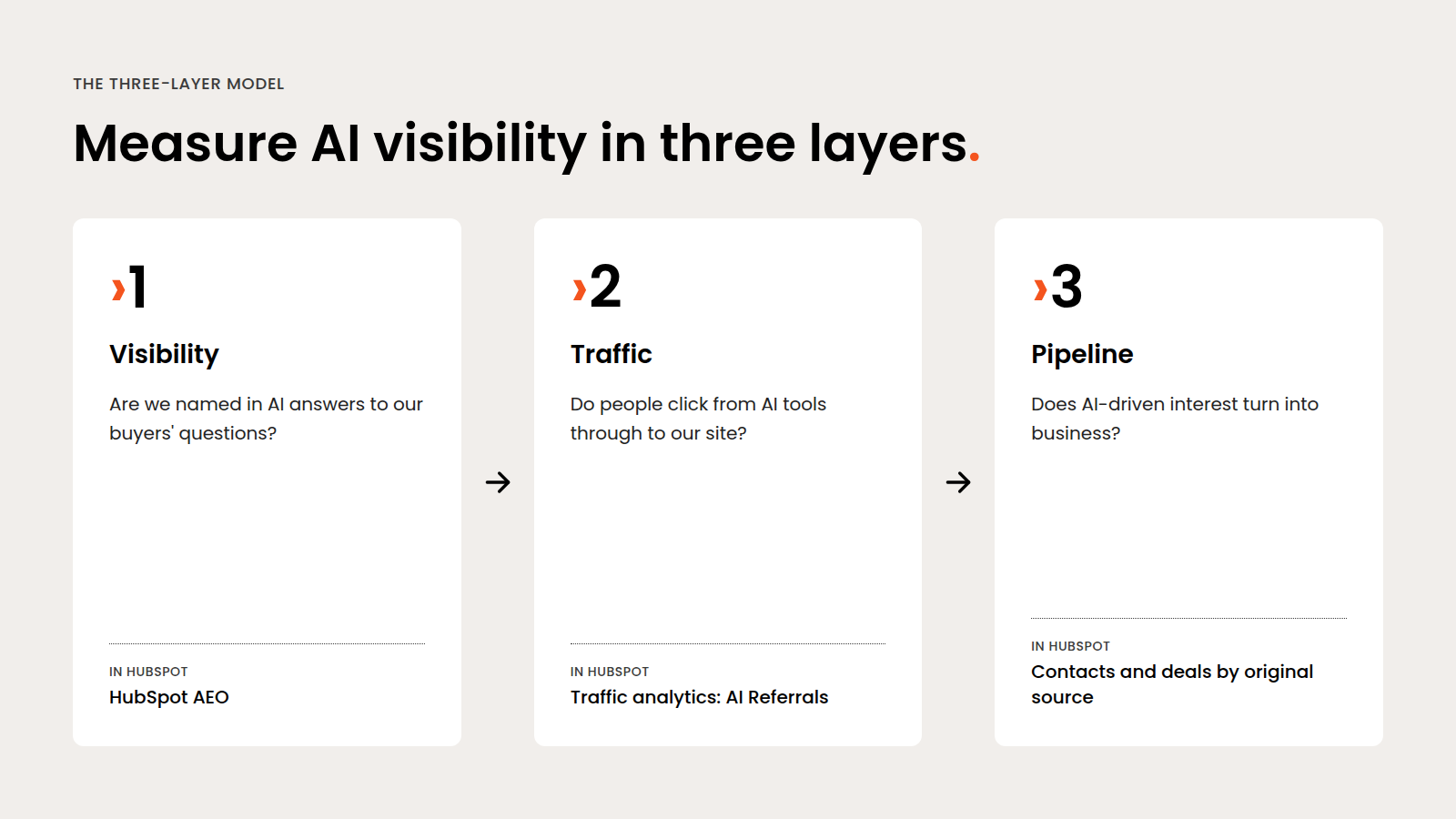
The layers work together. Layer 1 tells you where you are missing. Layer 2 tells you which pages actually earn clicks. Layer 3 tells your leadership team whether any of it is worth the investment. Visibility without a pipeline is vanity. A pipeline without visibility data leaves you guessing at the cause.
How do you set up AI visibility tracking in HubSpot, step by step?
- Get a baseline with the free AI Search Grader. The AI Search Grader scores how ChatGPT, Perplexity and Gemini describe your brand on sentiment, presence quality, brand recognition, share of voice and market position. It takes a few minutes and gives you a starting point to compare against later.
- Set up HubSpot AEO for ongoing tracking. HubSpot launched AEO on April 14, 2026. It runs a set of prompts against ChatGPT, Gemini and Perplexity and reports a visibility score, competitor comparison, cited sources and prioritised recommendations. It is included in Marketing Hub Professional and Enterprise, or available on its own for $50 per month per brand.
- Choose prompts from real buyer questions, not keywords. You can only track a limited number of prompts, so pick them carefully. The best sources are already in your CRM: questions sales hears in first meetings, support tickets, and chat logs. A prompt like "Which HubSpot partner in Sweden can help an energy company with customer portals?" says more than "HubSpot partner".
- Make AI Referrals visible in your traffic reports. In traffic analytics, HubSpot groups visits from ChatGPT, Claude, Perplexity, Gemini and similar tools under AI Referrals. Build a saved report showing sessions and conversion rate from this source by landing page, and compare it with organic search.
- Connect AI referrals to contacts and deals. Build a report on contacts whose original source is AI Referrals, and on the deals associated with them. For more details, use a workflow to copy the first AI touch into a custom contact property, so it isn't lost when the contact returns through another channel. This is where marketing automation and CRM have to work together.
- Set a rhythm. Check visibility and AI referrals monthly. Re-run a full review of prompts and priority pages every quarter, because AI tools change what and whom they cite all the time.
How do you turn the numbers into action?
The data only matters if it changes what you publish. I prioritise in this order:
- Prompts where competitors are named and you are not. These are your clearest gaps. Look at which sources AI cites for them. If they are competitors' guides, you need a better page. If they are review sites, forums or trade media, you need to be present there, not just on your own site.
- High-intent pages that get AI referrals but convert poorly. The AI has already sent you a qualified visitor. Make sure the page answers the question directly and offers a clear next step.
- Pages that should be cited but aren't. Check them against the signals AI tools look for: a direct answer at the top, original data or a point of view, named specifics, a structure that is easy to parse (headings as questions, FAQs, schema), and a visible, recent date.
What are the limits of measuring AI visibility today?
Be honest with your stakeholders about three things. AI referral numbers undercount, because many AI-influenced visits arrive as direct traffic. Prompt tracking is a sample, not a census: it shows how AI answers the questions you chose, not every question buyers ask. And coverage varies between tools. At the time of writing, HubSpot AEO tracks ChatGPT, Gemini and Perplexity, but not every AI assistant. Treat the numbers as trends to act on, not exact counts.
