Inbound marketing is still relevant for industrial and manufacturing companies because your buyers research quietly and extensively before they contact sales. Larger buying groups and sales cycles of 6–18 months make inbound more valuable, not less: without it, you are invisible for most of the evaluation. What has changed is how inbound must be done.
This is for marketing and sales leaders at manufacturing, industrial tech and energy companies. If you sell mainly through distributors who own the customer relationship, the logic still holds, but your audience includes the distributor.
What has changed for inbound in 2026?
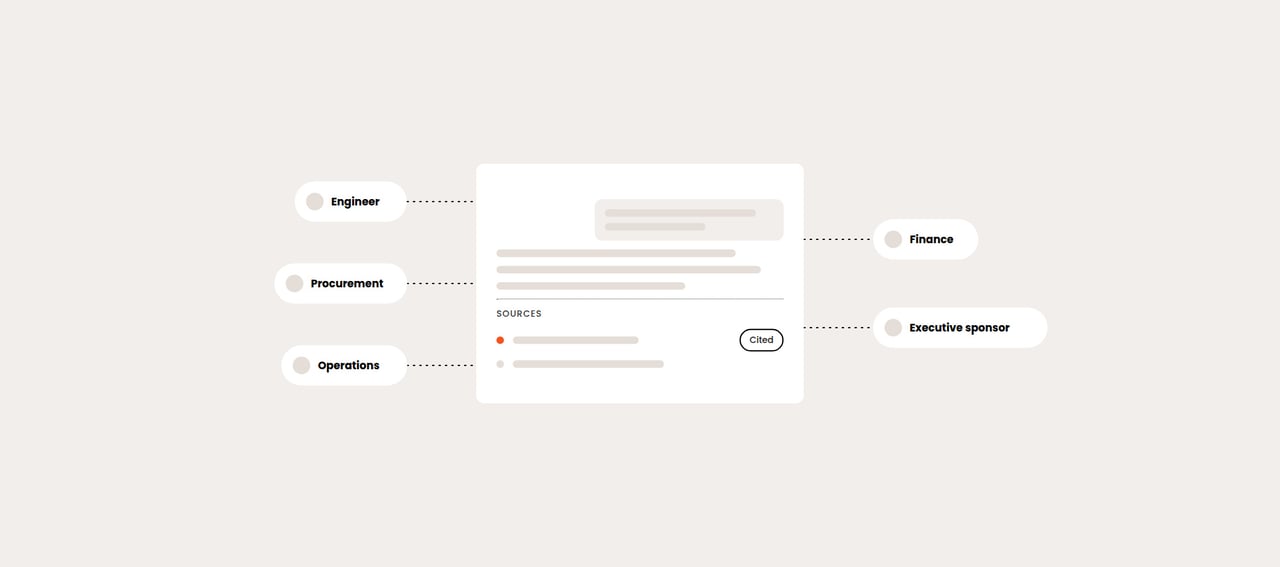
Two things have changed. Buyers increasingly start their research with AI assistants such as ChatGPT, Gemini and Perplexity, which summarise content rather than send traffic. My colleague Anders Björklund looks at what that means in his article 'Your buyers are elsewhere: what should your marketing do?'. And buying groups in industrial purchases keep growing, with engineering, procurement, operations and finance all involved.
Neither change makes inbound obsolete. Both raise the bar. Content now has to be specific enough to be cited in an AI answer and useful enough to be forwarded inside a buying group.
What is inbound marketing, really?
HubSpot, which popularised the term, describes inbound as attracting customers with valuable content and experiences rather than interrupting them with advertising. Most agencies repeat some version of that. It's accurate, but for industrial B2B it leaves out the part that matters most: who the content is for. My own definition, after more than 15 years in online strategy:
Inbound marketing in industrial B2B means making your expertise findable and usable for every role in the buying group, at the moment they are researching, so they can justify choosing you internally.
Three myths about inbound in industrial B2B
Myth 1: "Our buyers don't search online"
They do, quietly. Engineers, procurement managers and production leads research suppliers, specifications and alternatives long before they call anyone. If your expertise isn't findable, you aren't on the shortlist.
Myth 2: "Inbound is just blogging"
It isn't. In an industrial sale, inbound content is the evidence each buying role uses to justify a decision. Inbound makes your expertise accessible to different buying roles and gives them useful evidence to share internally.
Myth 3: "AI search will make inbound pointless"
It's the opposite. AI assistants need sources to cite, and they favour content that answers a question clearly and specifically. Generic content loses. Clear expert answers win. See why helpful content still doesn't get cited by AI.
How do you market to a buying committee rather than a single lead?
You market to a buying committee by giving each role the content it needs to say yes. Map the roles first, then build content for each.
| Buying role |
What they research |
Inbound content that helps |
| Engineer or technical specialist |
Specifications, suitability, integration |
Technical guides, application notes, comparisons |
| Procurement |
Supplier risk, terms, total cost |
Total-cost explanations, certifications, references |
| Operations or production lead |
Downtime, implementation effort |
Implementation timelines, case studies |
| Finance |
Business case, payback |
ROI logic, cost-of-inaction content |
| Executive sponsor |
Strategic fit, supplier stability |
Thought leadership, customer stories |
Just like in the past, companies still need to attract the right people, whether specific ICPs, buyer personas or decision-makers, with content that addresses their needs and their buying journey. As buying evolves, inbound has to evolve with it.
When to use inbound, and when to add something else
- Use inbound for considered purchases with technical evaluation and several decision-makers.
- Add account-based marketing for a small number of very large target accounts.
- Add direct outreach if you need pipeline next quarter. Inbound builds over months.
- Rely less on inbound for commodity products bought mainly on price and availability, where catalogue presence and distributor relationships matter more.
A worked example from our own site: a single explanatory article on the difference between online and digital draws more search visibility than any of our service pages. It answers one question clearly, and it keeps being found. The takeaway: in inbound, the content that wins is the content that answers a real question better than anyone else.
Actionable takeaways
- First (low effort): List the roles in your typical buying group and the one question each asks before contacting you.
- Next (medium effort): Check whether your site answers those questions directly, in text, not only in PDFs.
- Then (medium effort): Ask sales which content they actually send to customers, and build more of that.
- Ongoing: Track whether your expertise appears in AI-generated answers for your core buyer questions. I explain how in how to measure AI search visibility in HubSpot.