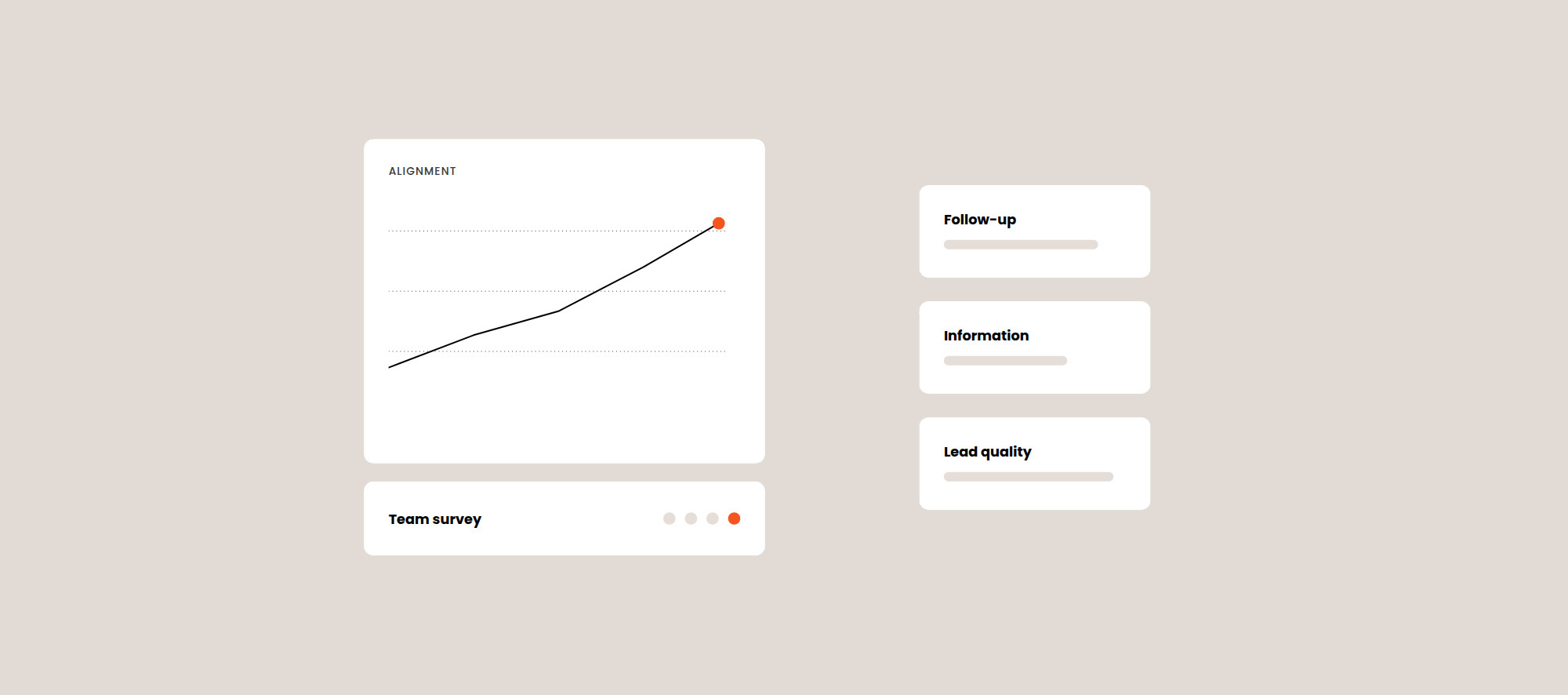
Measure marketing-sales alignment at the handover: how fast sales follows up on leads, whether sales gets the information it needs, and whether leads match what sales considers qualified. Add marketing's share of pipeline and a short recurring survey of both teams. Compare everything against a baseline taken before you started.
This is for leaders who have started aligning marketing and sales and want to know if it's working. If you haven't taken a baseline yet, the FAQ explains how to reconstruct one.
Why measure the handover, not just the results?
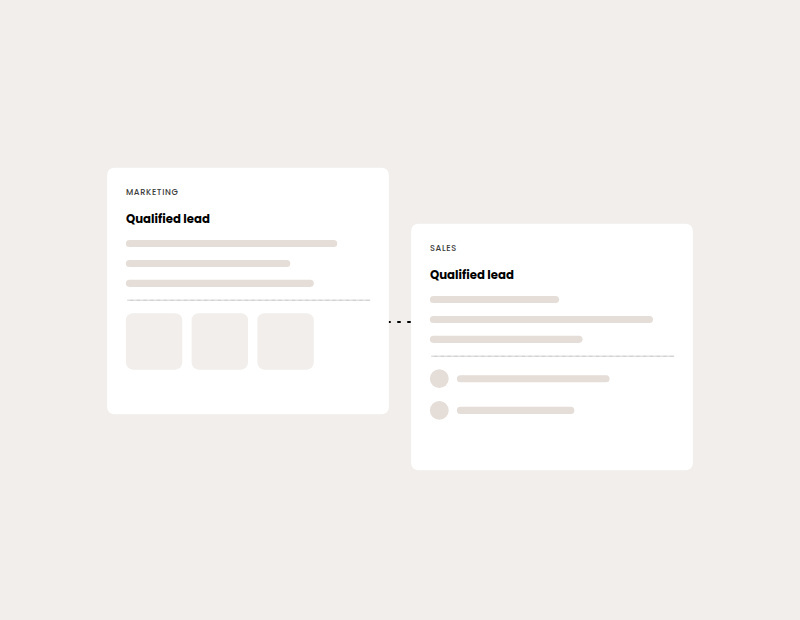
Measure the handover because that's where alignment shows first. Revenue takes one or more sales cycles to move, while the handover changes within weeks. One useful way to measure alignment is to look at what marketing is handing over to sales and what happens next.
Three questions tell you most of what you need. Are sales following up quickly? Do they have enough relevant information to make that first conversation useful? Are the leads actually aligned with what sales considers qualified? If sales is spending a lot of time finding missing information or consistently receiving poorly qualified leads, that's a strong indication that the alignment still needs work.
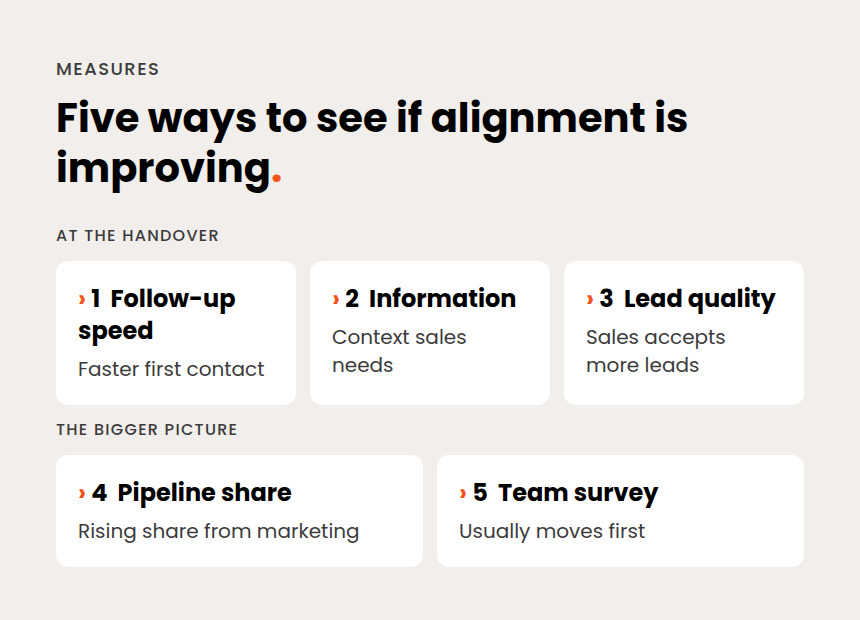
The five measures
The first three measure the handover. The last two show the bigger picture.
1. Follow-up speed and rate
Track the time from handover to first sales activity, and the share of leads with no activity at all.
Questions to ask: "How long did last month's leads wait for first contact?"
2. Information at handover
Track the share of leads with required fields completed, and ask sales what context was missing.
Questions to ask: "What did you have to look up yourself before your last first call?"
3. Agreement on lead quality
Track the share of handed-over leads that sales accepts as qualified, with a reason for every rejection.
Questions to ask: "Of the last ten leads you rejected, why did you reject each one?"
4. Pipeline share
Track marketing-sourced and marketing-influenced pipeline as a share of total pipeline.
5. Team perception
Run a short survey of both teams, three to five questions, every month. Stellan Björnesjö makes the same point in his article 'How to align marketing, sales and service in practice': the qualitative signal usually moves first. People feel the difference in collaboration before the numbers confirm it.
Improving vs. still needs work
| Measure | Alignment improving | Still needs work |
|---|---|---|
| Follow-up | Faster first contact, few untouched leads | Leads wait days or get no contact |
| Information | Sales starts calls with the context it needs | Sales researches every lead itself |
| Lead quality | Sales accepts most handed-over leads | Many leads rejected, reasons unknown |
| Pipeline share | Rising, stable share from marketing | Flat or contested numbers |
| Team survey | Better scores on collaboration and trust | Scores unchanged or falling |
The takeaway: alignment is improving when sales follows up faster, needs less missing information and accepts more of what marketing hands over.
How do you run the measurement?
Run it as a monthly check, with one shared HubSpot dashboard both teams review together. Baseline every measure at the start, then compare month by month, the same principle we apply in measuring success in a B2B enablement engagement. Keep the survey short so people actually answer it.
Where this applies, and where it doesn't
- Very long sales cycles make pipeline share slow to move. Rely on the handover measures in the first months.
- Low lead volume makes percentages volatile. Look at trends over a quarter instead of months.
- Account-based selling shifts the focus from individual leads to engagement at target accounts.
- If definitions changed recently, reset the baseline. Otherwise you compare different things.
Actionable takeaways
- This month: Measure follow-up time and rate for last quarter's leads as your baseline.
- This month: Agree with sales which fields must be complete at handover.
- This quarter: Build one shared HubSpot dashboard with the five measures.
- Every month: Send a three-question survey to both teams and review it with the dashboard.