For a B2B company, digital transformation means changing how you attract, win, and keep customers so the work runs on shared data and defined processes instead of individual effort. It does not mean simply building a new website or adding more software. Start with the commercial change you want, then decide the capabilities, processes and technology needed to make it happen.
I write for leadership teams at mid-sized and large B2B companies in sectors such as manufacturing, industrial tech, energy, and professional services. If you are a digital-native company, you’ll recognise the ideas but probably not the starting point.
Why does the term need redefining in 2026?
It needs redefining because "digital transformation" has been used for everything from replacing paper forms to buying an AI tool. By 2026, most B2B companies have digitised the basics. Email, a CRM, and a website are now the basic requirements. Yet many still run their commercial process on spreadsheets, personal relationships, and a few heroic individuals, and new AI tools won’t change that on their own, as I argue, when AI in B2B is used for quality, not just efficiency.
The gap is no longer about access to technology. It is whether technology supports a shared way of working across marketing, sales and service.
Is digital transformation a project?
No. Digital transformation is not a project with a start and an end. I have been saying this for years, and it still surprises leadership teams that want a launch date. Technology changes, customers change, and your organisation changes, so the real goal is the ability to keep adapting.
To be fair to the opposite view
Boards and CFOs are right to ask for a scope and a date. Unbounded programmes drift and lose support. The answer isn’t to refuse dates. Run transformation as a series of bounded initiatives, each with its own scope, owner, and measure, within a direction that doesn’t end. The initiatives finish. The capability to keep changing remains.
What does "moving from doing digital to being digital" actually mean?
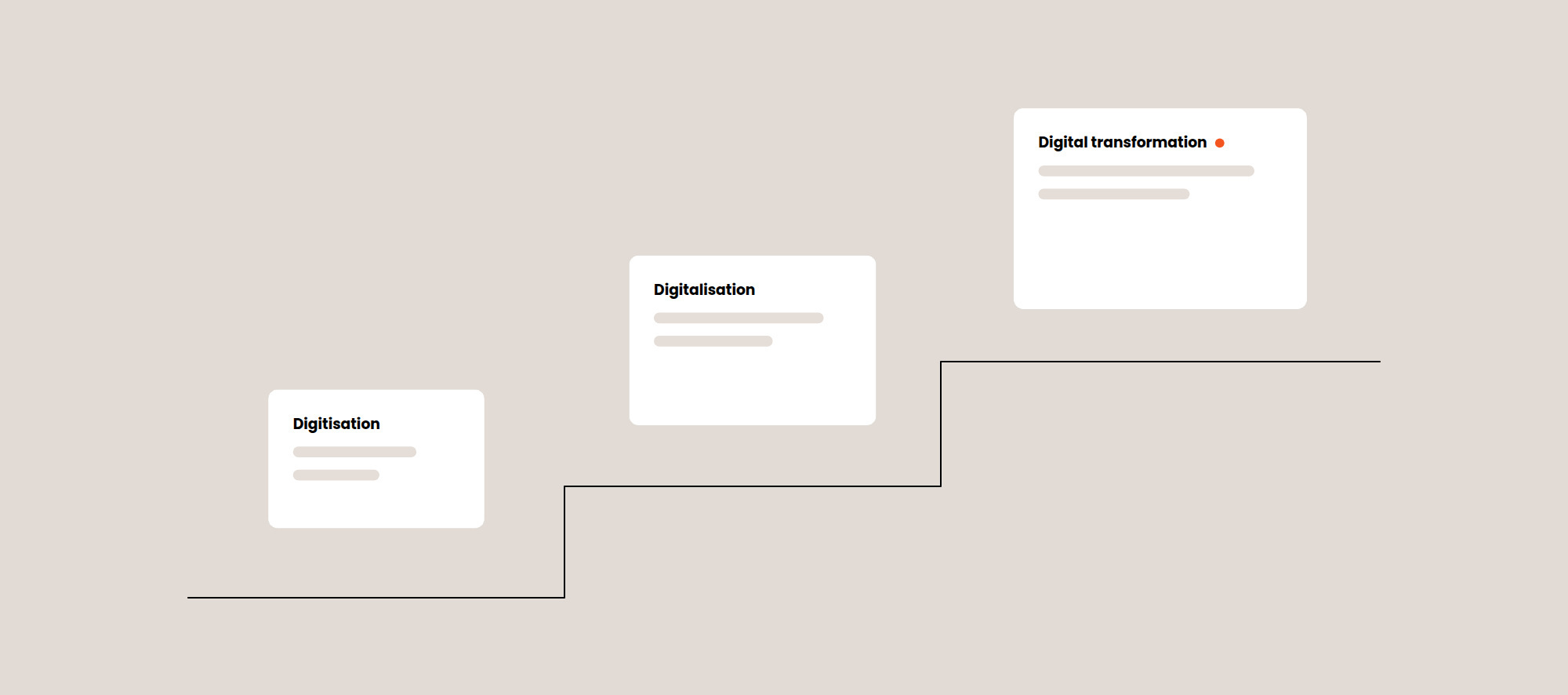
It means moving from using digital tools within teams to running the business on connected processes and shared data. I’ve written more about that shift from doing digital to being digital, and we explore the distinction between online vs digital. Each level below goes beyond simply digitising what you already do.
| Level | What it looks like | Example | Is it transformation? |
|---|---|---|---|
| Digitisation | Paper and manual steps become digital. | Order forms move to a web form. | No, it’s a prerequisite. |
| Digitalisation | Single processes improve with technology. | Marketing automates email nurturing. | Partly, but often within one team. |
| Digital transformation | Processes connect across departments around shared data. | Marketing, sales and service share one CRM, definitions and dashboards. | Yes. |
It is not simply about replacing paper with digital tools, but about using technology smarter in ways that fit how the organisation actually works, and perhaps improve current processes too.
The measure that matters is how repeatable your revenue engine becomes. If your best quarter depended on two people, you have not yet transformed.
The takeaway: you are “being digital” when your commercial results no longer depend on individuals working around your systems.
Where should a B2B company start? A readiness check
Start by checking whether you are ready to change processes, not just tools. That is what we mean by digital readiness. Ask your leadership team four questions:
- Can you describe, in one sentence, what should be different for customers in two years?
- Do marketing, sales and service agree on who your priority customers are?
- Is someone accountable for the change across departments, not just within IT?
- Are you willing to change how people work, not only which tools they use?
f you answer no to two or more, start with alignment and a shared goal before investing in new platforms. If you answer yes to all four, start by mapping one end-to-end customer flow and fixing where it breaks.
Where this applies, and where it doesn't
- It applies to B2B companies with several commercial teams, long sales cycles and customer relationships that span years.
- It is not an IT upgrade. Replacing an old server or ERP version is a technology project and should be run as one.
- It doesn’t need a complete overhaul to start. Many companies begin with one connected flow, for example, from lead to closed deal, and expand.
- If you lack basic digital tools, digitise first. Transformation builds on that foundation.
Actionable takeaways
- First (low effort, high impact): Write down the commercial change you want in two years, in customer terms, and get leadership to agree on it.
- Next (low effort): Run the four readiness questions with your leadership team.
- Then (medium effort): Map one end-to-end flow, from first contact to delivered customer, and mark where it breaks between departments.
- Only after that (higher effort): Choose or reconfigure the technology needed to support the new way of working.
Not sure where to start?
We're happy to run the readiness check with your leadership team and help you choose the first flow to fix.