
- Learn
- The B2B Enablement Hub
- Are you using structure to move faster or just proving you have it?
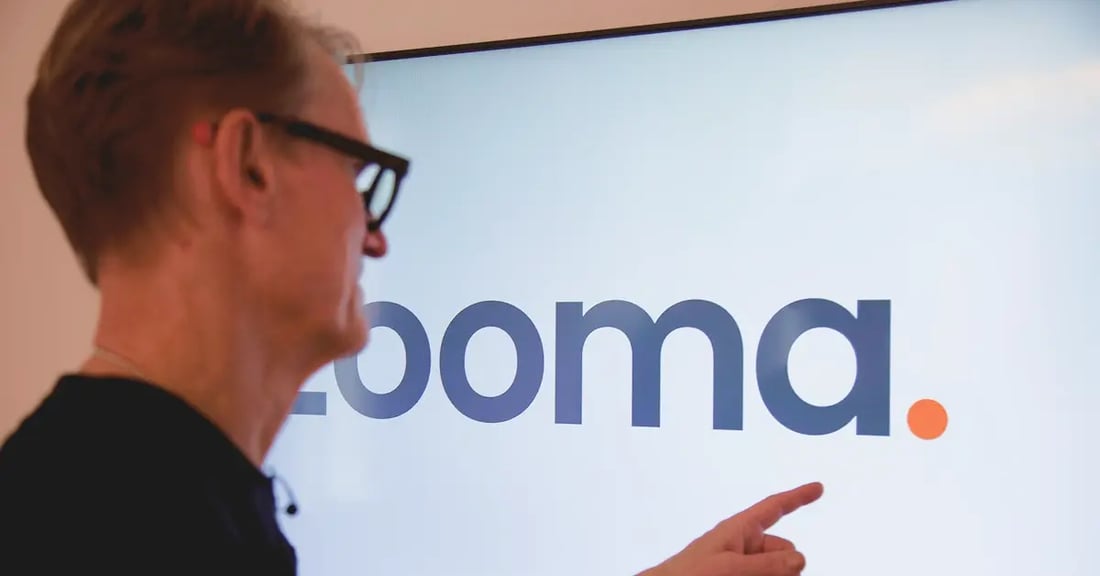
Mature B2B organisations no longer differentiate themselves by simply proving they have structure. They differentiate by how well that structure enables speed, clarity, and customer outcomes. That is what I think a small change in Zooma's logo helps illustrate.
I want to reflect on something very small. But also very telling. A dot.
If you look at Zooma’s logo over time, you will notice a subtle shift. Originally, there was a square dot after the name. Today, there is a circle.
At one level, that is a minor design update. At another level, it reflects a broader shift in how organisations build trust and show maturity. In 2001, a square communicated something buyers needed to hear. Today, a circle points to something many organisations still struggle to do.
Why the square made sense in 2001
When we started Zooma in 2001, the digital landscape was fundamentally different. Companies like ours needed to prove something foundational: that we had structure. Process. Control.
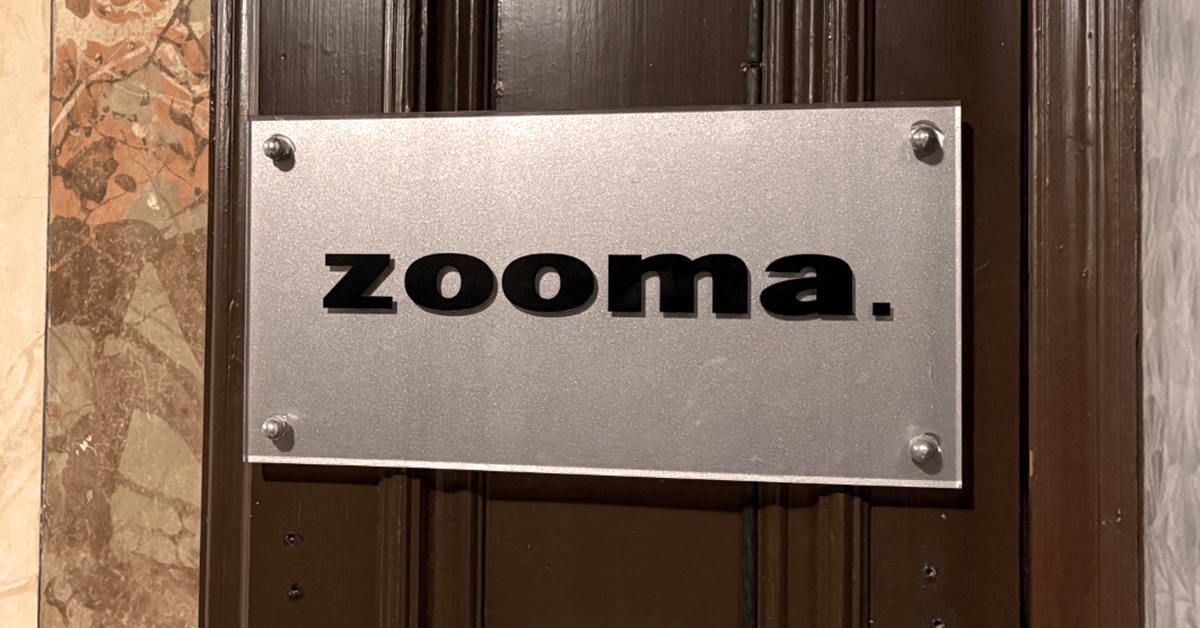
The square symbolised just that. It said, "There is a method behind this." You can trust us; we have built an organised, reliable, and serious business.
That was the right message for the time. Digital agencies were new. The internet as a commercial channel was still new. Many buyers were sceptical. Structure was not assumed. It was a differentiator.
So the square was not just a design choice. It was a positioning statement.
What changed between then and now
That is no longer the situation.
Today, structure is expected. It is a baseline requirement. If a B2B company’s main message is that it has clear processes, strong governance, and a reliable methodology, it is not really differentiating itself. It describes the minimum standard buyers already expect from any serious provider.
The leadership challenge has changed.
For many mature organisations, the real question is no longer whether they can build a structure. The real question is whether they can use structure without slowing themselves down. Can they be aligned and still move quickly? Can they be systematic and still explore? Can they create control without creating drag?
That is where organisational enablement becomes more important than structure alone.
What organisational enablement means
Organisational enablement is the ability to create the conditions that help people perform effectively. It includes processes, technology, governance, data, skills, and leadership structures that reduce friction and accelerate execution.
Structure defines how work should happen. Organisational enablement ensures work can happen effectively.
That distinction matters. Many organisations have a structure in place, but fewer use it to create momentum. Fewer use it in ways that create momentum.
What the circle represents
The circle in Zooma’s logo is not decoration. It represents a different mindset.

Where the square conveys stability and boundaries, the circle conveys movement, continuity, and flow. It suggests that the foundation is already there. It no longer needs to be constantly demonstrated. It can now be used as a platform for better decisions, faster execution, and clearer customer value.
That is the shift from proving to enabling.
It is the difference between an organisation that is processed and one that has learned to think through its processes.
Square mode vs circle mode
| Square mode | Circle mode |
|---|---|
| Structure is used to signal seriousness | Structure is used to reduce friction |
| Meetings are used to demonstrate alignment | Meetings are used to make decisions |
| Governance expands to show control | Governance is kept as light as possible while still creating clarity |
| Customer conversations focus on proving capability | Customer conversations focus on helping buyers decide |
| Reporting becomes evidence that work is managed | Reporting becomes a tool for faster action |
| Leadership attention stays internal | Leadership attention stays on customers, execution, and outcomes |
This is not really a branding distinction. It is an operating distinction.
How square mode shows up in practice
Over the years, I have worked with many B2B companies across various industries and have repeatedly seen this pattern.
Square mode usually looks like this: Leadership meetings spend more time reviewing status than removing blockers.
- Leadership meetings spend more time reviewing status than removing blockers.
- Major initiatives slow down because too many people need to approve them.
- Teams create extra reporting to show that work is under control.
- Customer-facing teams spend too much time explaining internal processes and not enough time helping buyers move forward.
- Internal alignment becomes the output instead of the thing that supports better execution.
In these organisations, the structure no longer enables progress. It has become the work itself.
How circle mode shows up in practice
Circle mode looks different, even when the org chart appears similar.
It usually looks like this:
- Teams use shared structure to make decisions faster, not to delay them.
- Governance exists to clarify ownership, not to multiply checkpoints.
- Meetings end with choices, trade-offs, and next steps.
- Reporting highlights where intervention is needed, not simply that activity is happening.
- Customer conversations are clearer because the organisation does not preoccupy itself with proving that it is organised.
You can often see the difference most clearly in leadership behaviour.
In one type of leadership meeting, people spend the first forty minutes demonstrating that they control the work. In the other, they spend that time deciding what matters most, removing friction, and moving the business forward.
That is a small behavioural difference, but it has significant consequences.
When more structure is still the right answer
This argument does not apply equally in every situation.
More structure is still the right answer when:
- Delivery quality is inconsistent
- Roles and responsibilities are unclear
- Decision rights are undefined
- Customer commitments are regularly missed
- Teams are operating without a reliable shared process
In those cases, the problem is not over-structuring. The problem is that the foundation is still too weak.
The shift from square mode to circle mode is most relevant for organisations that already have credible operating discipline. If the basics are missing, more structure may still be necessary before enablement becomes the real issue.
The uncomfortable diagnostic
Most leadership teams would say they use structure as an enabler rather than a constraint. The more difficult question is whether their behaviour supports this claim.
A useful diagnostic is to look at the last three months and ask:
- Where did leadership attention go most often: governance or customer outcomes?
- What slowed down the last major initiative: lack of clarity or too many approvals?
- Did meetings produce decisions, or mainly reassurance?
- Did reporting help teams act or mainly help leaders feel informed?
- In customer-facing content and sales conversations, are you demonstrating capability or enabling decision-making?
Another way to test this hypothesis is to look for the signals that the structure has become the work itself:
- Approval paths keep expanding
- Reporting increases without improving action
- Initiatives stall in alignment loops
- Internal language becomes more prominent than customer language
- Teams spend more energy maintaining the system than creating value through it
These are not comfortable questions. But they are the right ones.
What 'Enable what's next' actually means
At Zooma, our tagline is 'Enable what’s next.'
To me, that phrase captures the same logic as the shift from square to circle. Enabling means the structure exists in service of something beyond itself. The point is not order for its own sake. The point is motion.
The organisations that make the most progress are usually the ones that have stopped proving and have started to move. They do not spend meetings demonstrating alignment. They are aligned, and that alignment shows up in the quality of their decisions, the clarity of their priorities, and the speed of their execution.
That shift is harder than it sounds. It requires confidence. You have to trust that your foundation is solid enough that you no longer need to keep pointing at it.
But once you make that shift, the difference is significant.
A small dot. A real question.
The logo change at Zooma is minor. But I think it points to a real question for any B2B leader.
Are you still proving that you have structure?
Or are you using structure to move faster, communicate more clearly, and create better customer outcomes? The answer shapes almost everything else.
Frequently asked questions
What is the difference between square mode and circle mode?
Square mode uses structure to signal credibility — meetings demonstrate alignment, governance expands to show control, and reporting proves work is managed. Circle mode uses structure to reduce friction — meetings produce decisions, governance clarifies ownership, and reporting drives action. The org chart can look identical in both; the difference is in behaviour.
How do you know when structure has become the work itself?
The clearest signs are expanding approval layers, more reporting without faster decisions, initiatives stalling in alignment loops, and customer-facing teams spending more time explaining internal processes than helping buyers move forward.
When is more structure still the right approach?
When delivery is inconsistent, roles are unclear, or customer commitments are regularly missed, adding more structure is still the right answer. The shift from square to circle mode only makes sense once the foundation is solid. If the basics are missing, adding structure is still the right move before enablement becomes the real question.
Click below to get more articles on B2B enablement, decision-making, and what helps B2B teams create momentum.

