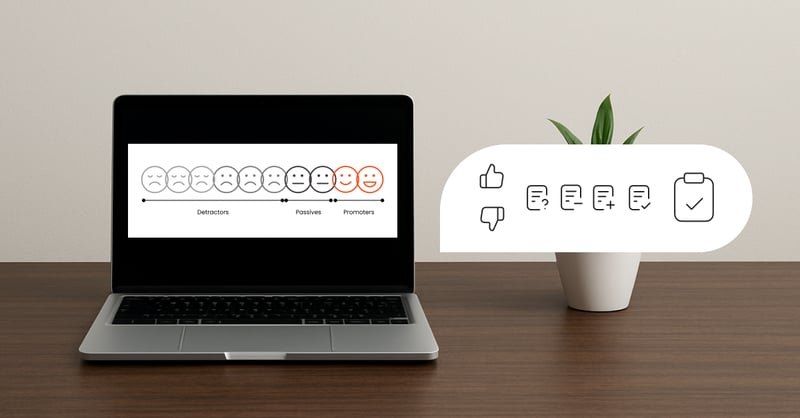
NPS is the abbreviation for Net Promoter Score. It's a metric for assessing loyalty to a company, brand, product, or service, but it can also be used as an indicator of customer satisfaction. NPS surveys are easy to implement, and the results are easy to calculate. In this article, I'll look closer at how it works.

A net promoter score survey is based on a single question: “How likely is it that you would recommend us to a friend or colleague? 'Zero' means 'not at all likely', and '10' means 'extremely likely'.
- Score 9-10. Promoters; your most loyal respondents.
- Score 7-9. Passives; satisfied but enthusiastic.
- Score 0-6. Detractors; who are unhappy.
NPS is very straightforward, allowing you to benchmark your company’s results against others in your industry. When Zooma and our friends use NPS, we always add a question that lets respondents briefly explain their score. The result indicates their satisfaction and usually lets us know where and how we need to improve.
Occasionally, our Zooma friends ask for advice on how to get customers to complete NPS surveys. Therefore, I’ve put together a presentation (.pptx) with tips for improving your survey response rate. I hope it will be helpful as you work to increase customer satisfaction.
For more information about the role NPS plays in customer satisfaction, please have a look at our customer satisfaction guide. It expands on this article and mentions a few other ways you can measure and improve your customer satisfaction rate.


Get the guide to increasing NPS response rate