
- Learn
- The B2B Enablement Hub
- What is the difference between being present and being active on LinkedIn?

Being present on LinkedIn means having a complete profile and a network. Being active means regularly contributing something useful to the people you want to reach by commenting, publishing and following up. Presence makes you findable. Activity is what starts conversations with potential customers, and those conversations are where business results come from.
Why does the difference matter more now?
A profile on its own no longer sets you apart, because most of the B2B professionals you want to reach already have one. What gets noticed is what you contribute.
When we first published this article in 2019, the advice focused on setting up a profile and publishing long articles on LinkedIn Pulse. LinkedIn has since dropped the Pulse name, and attention has moved to the feed: short posts, comments, video and document posts. That shift rewards people who take part in discussions, not only people who publish.
My position is simple. A well-kept profile is necessary, but it is rarely enough. If no one hears from you, your profile waits for visitors who never arrive.
What does being present on LinkedIn involve?
Being present means doing the basics that make it possible for potential customers, partners and peers to find you and understand what you do. It covers four things:
- Keep your profile complete and up to date, so people who look you up can quickly see what you do and whom you help.
- Build your network of connections with customers, colleagues, partners and people you meet professionally.
- Follow relevant people and companies, so your feed shows the discussions your buyers and peers care about.
- Read posts and articles to stay informed about your industry and your customers' challenges.
Presence is a starting point. On its own, it rarely starts a conversation.
What does being active on LinkedIn look like in practice?
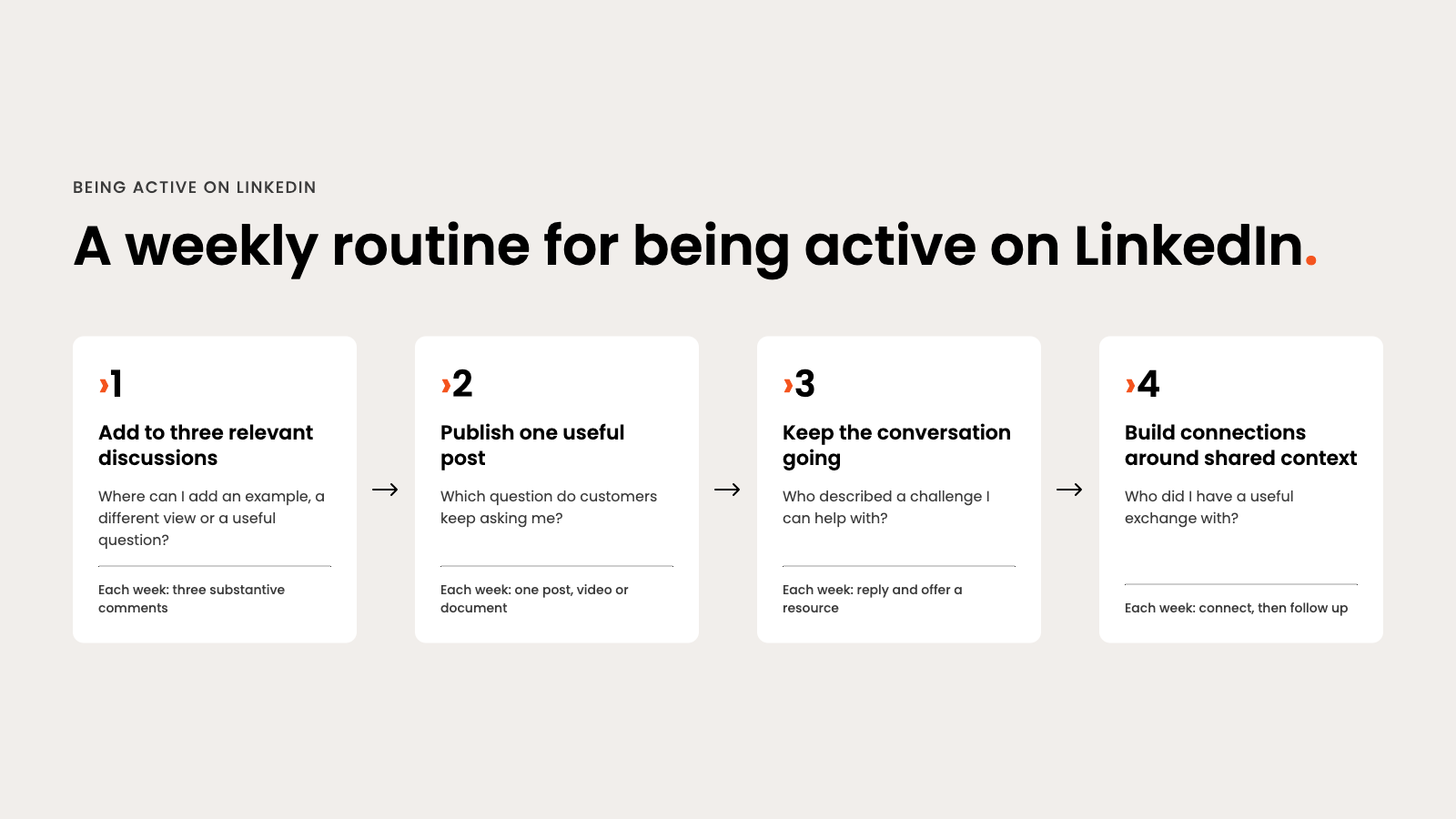
Being active means regularly contributing something useful to the people you want to reach. For a B2B professional, I recommend starting with four weekly habits.
1. Add to three relevant discussions each week
Comment on posts from customers, industry specialists or potential buyers. Share an example, offer a different perspective or ask a specific question that moves the discussion forward. A comment that only says "Great post" adds nothing and is quickly forgotten.
2. Publish one useful post each week
Answer a question customers regularly ask, explain a common mistake or share a lesson from a recent project. For example: "Three questions to ask before replacing your CRM." Use a short video or a document post when it helps explain the subject.
3. Keep the conversation going
Reply to substantive comments on your posts. When someone describes a challenge you can help with, offer a relevant resource and ask whether they would like you to send it privately.
4. Build connections around shared context
After an event or a useful exchange, send a connection request that refers to the conversation. Follow up with something relevant before asking for a meeting.
Treat this as a manageable starting routine, not a target to hit at any cost. The point is regular, useful contact with the right people.
Present vs active: how do they compare?
Presence and activity do different jobs. Presence makes you credible when someone looks you up. Activity creates the reasons for people to look you up in the first place.
| Being present | Being active | |
|---|---|---|
| What it involves | A complete profile, a network, following relevant people and companies | Commenting, publishing and following up every week |
| What it achieves | People can find you and understand what you do | People start to recognise you and talk to you |
| Who notices | People who already know your name and search for you | People in your network and their networks, including potential buyers |
| Effort | Set up once, then update occasionally | A small, regular weekly routine |
| Sign that it works | Your profile answers the questions people have when they look you up | Relevant conversations, connection requests and meetings |
How do you know whether being active is working?
Judge it by the relevant conversations and relationships it creates. Use post statistics as supporting evidence, not as the goal.
Impressions and likes tell you how many people saw a post. They do not tell you whether the right people saw it. These signals say more:
- Who comments and reacts: are they people from companies and roles you want to reach?
- Replies to your follow-ups: do people accept the resources you offer and respond?
- Connection requests: do relevant people connect with you after seeing your posts or comments?
- Next steps: do conversations lead to calls, meetings or requests for help?
Review these signals every few months. Keep the habits that create relevant conversations and change the ones that do not.
Actionable takeaways
- Check your profile this week. Make sure it clearly says what you do and whom you help, because active engagement sends people there.
- Choose three people or companies to engage with. Start with customers, specialists or potential buyers whose posts you can add something to.
- Write down five questions customers often ask you. Each one is a ready-made topic for a weekly post.
- Block a fixed slot in your calendar each week for commenting, posting and replying, so the routine survives busy periods.
Review after three months by looking at who engaged and which conversations followed, not just at your post statistics.
Editor's note: This article was first published on 17 April 2019. It was updated on 23 October 2026 to reflect current LinkedIn practices.
