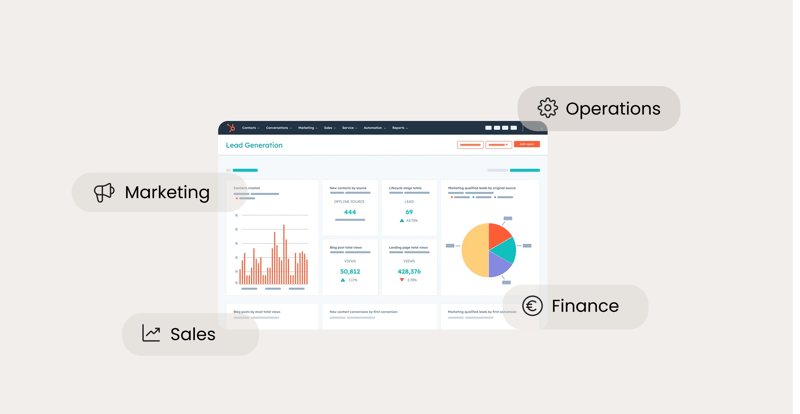
If you are running ads on Facebook and Instagram, you can now follow up and measure the performance of the ads in HubSpot and thereby get an improved overview of your online activities, both on- and offsite (a.k.a. social media).
The HubSpot Ads add-on feature has been available for some time and makes it possible to track Google AdWords campaigns as well as LinkedIn ads in HubSpot. Now the integration has been extended also to include ads published on Facebook and Instagram.
You just started with HubSpot and need help?

While the overall effectiveness of sponsored ads in social media can be questioned, there are still occasions when it is motivated to combine an inbound strategy with sponsored ads to amplify reach.
When to consider sponsored ads in combination with an inbound campaign:
- If you are running an inbound campaign, it will take a while to build organic SEO value. To give the campaign an extra boost, you can add sponsored ads to get immediate results/traffic.
- With sponsored ads, you can reach potential customers who are further down the buyer’s journey and are searching for a specific brand or product.
- You can also get a faster ‘review’ of the value of your campaign content. For example, find out which ads and campaigns generated the most leads and what those leads are worth for your business.
The beauty with the Ads add-on feature is that you can measure true ROI of ads—beyond click rate and the amount of traffic. That is, you can measure how many leads and ultimately how many customers (and revenue) a particular add or sponsored update creates.
If you want to know more about HubSpot ads add-on and how to combine inbound with sponsored content, Talk to an expert here.