Thoughts, facts, and knowledge
The B2B Enablement Hub
 Anders Björklund
Page 2 of 10

How to align personal and company branding
Personal and company branding work best when they support the same market position. A personal brand builds trust through individual expertise, visibility, and relationships. A company brand creates consistency, recognition, and long-term credibility in the market.

The hidden AI risk most leadership teams ignore
When AI comes up in leadership discussions, silence is not a sign of alignment. It is often a sign of uncertainty, hesitation, or unspoken disagreement, which makes it a strategic risk.

Are you using structure to move faster or just proving you have it?
Mature B2B organisations no longer differentiate themselves by simply proving they have structure. They differentiate by how well that structure enables speed, clarity, and customer outcomes. That is what I think a small change in Zooma's logo helps illustrate.

Demand generation and revenue marketing for B2B enterprises
Demand generation and revenue marketing in a large enterprise work when marketing, operations, sales, and finance share definitions, trusted measurement, cross-functional governance, and connected systems. The biggest enterprise problem is usually not strategy creation. It is turning strategy into repeatable execution across fragmented teams, tools, and incentives.

Are sales teams often the last to embrace change?
When buyers are increasingly digitally savvy and market dynamics shift swiftly, sales teams should be at the forefront of adaptation. Yet, observations suggest that sales departments often lag in embracing change.
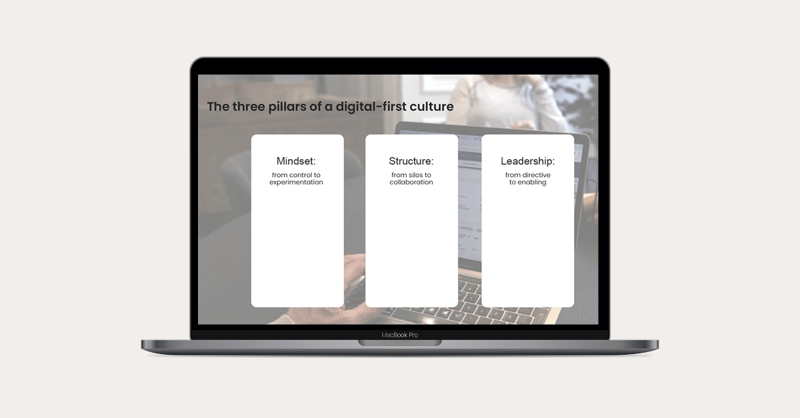
Digital transformation's biggest obstacle isn't technology - it's you!
In B2B, clinging to outdated methods is a surefire way to become obsolete. Digital transformation isn’t just a buzzword; it's the lifeline your organisation desperately needs. Yet many companies remain shackled by misconceptions, treating digitalisation as a mere IT upgrade rather than the radical overhaul it demands.

From doing digital to being digital
Digital transformation involves more than just adopting new technologies—it's about rethinking your entire business strategy. Many transformations fail due to natural resistance to change and a tendency to cling to outdated cultures.
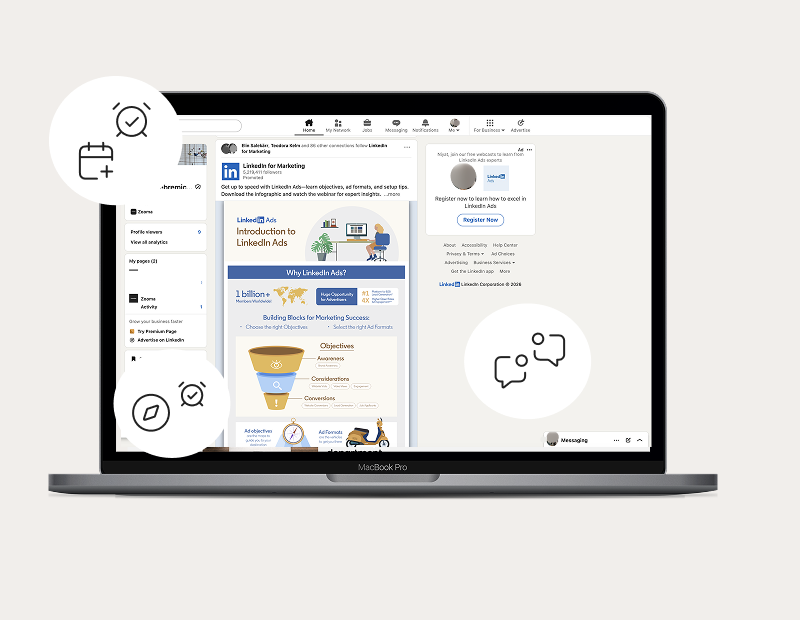
Building B2B relationships through LinkedIn comments
Digital interactions are as crucial as face-to-face meetings; LinkedIn is a vital platform for B2B sales professionals. Engaging on LinkedIn isn't merely a task to check off but an integral part of a sales representative's role. It's about building relationships, sharing insights, and staying top of mind with clients and prospects.

The imperative of curiosity
The importance of prioritising curiosity over judgement has never been more urgent, given the enormous influx of information. The saying "To understand is to bridge divides; to assume is to widen them" serves as a timely reminder of the power of our approach to information and its significant impact on societal cohesion.

Cold outreach is never step one—it's step three
Cold outreach in B2B often falls flat—not because of poor writing or bad timing, but because it’s mistakenly treated as the starting point of a relationship. Whether it's via email, a LinkedIn message, or a phone call, prior research and engagement should inform your outreach, not be the initial step. Practical outreach tests whether you’ve done your homework, earned attention, and have something relevant to offer.
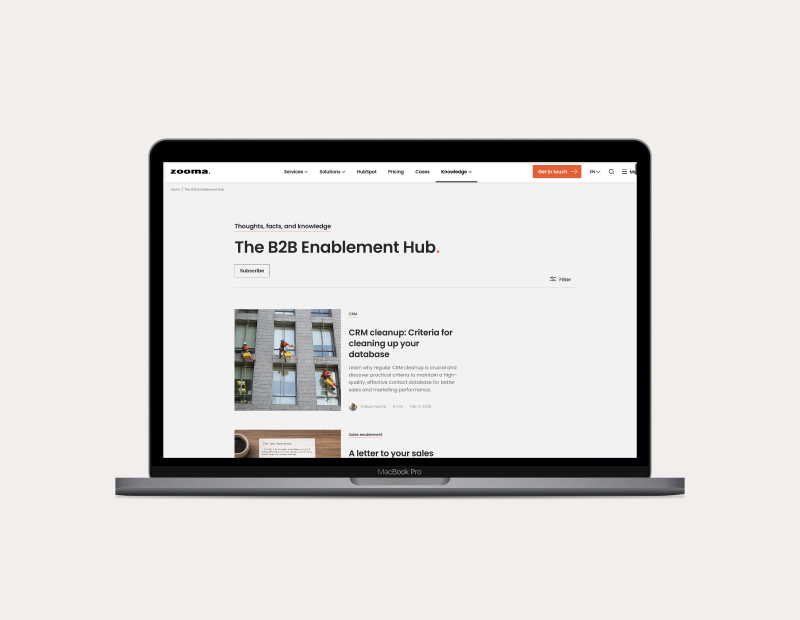
Why we changed the name to The B2B Enablement Hub
For more than a decade, Zooma has used The Onlinification Hub to guide B2B companies through digital transformation. It has been our home for insights, guidance, and practical tools—shaped by our belief that companies must continuously adapt to how people research, evaluate, and buy.
But the world has changed. And so have the needs of the people and companies we serve.

A letter to your sales department
Sales today are not what they used to be. In B2B, buyers are more informed, more connected, and more empowered than ever. They research online, evaluate extensively before engaging, and expect conversations that respect their context, needs, and timing. If your sales team still relies on outdated playbooks—chasing volume over value, sending generic outreach, and relying on intuition rather than data—its competitors are already leaving it behind.

The challenges in modern B2B sales
B2B sales are no longer just about hitting targets or booking meetings. It's about managing complexity while staying relevant to real people with real problems. Most sales efforts today fall short here. They treat sales as a solo performance, focusing solely on persuasion. But modern selling is a team sport—and a strategic one.

What and how to research before meetings!
I can’t remember how many times I've seen people walk into meetings without genuinely knowing who they were meeting or the purpose of the gathering. For me, being prepared has never been optional; it’s the most significant advantage you can bring to any meeting.

Breaking down the barriers of departmental silos
I still see companies working in silos. Despite strong efforts to coordinate, organisations tend to revert to old habits after a few months. Teams drift apart, communication breaks down, and everyone quickly starts heading in different directions again. In this article, I share my thoughts on why and how to dismantle your departmental silos.