
- Learn
- The B2B Enablement Hub
- LinkedIn is your B2B business hub
Initially, LinkedIn was simply a digital CV repository. Users logged on occasionally to update their job titles or add new roles. Within a few years, the platform has transformed into the hub for B2B networking, knowledge sharing, and relationship building across the Western world.
Today, the feed is where professional conversations take place, and it continues to expand in reach and significance. In conversations I’ve had with the LinkedIn team, they’ve highlighted how quickly feed engagement has been rising—doubling year on year. For any marketer committed to brand visibility and long-term growth, LinkedIn is essential. It’s the arena.
If you’re not actively posting, engaging, and using direct messages to connect, you’re not just missing out on casual connections—you’re missing out on revenue, influence, and opportunities.
Why LinkedIn matters most in B2B
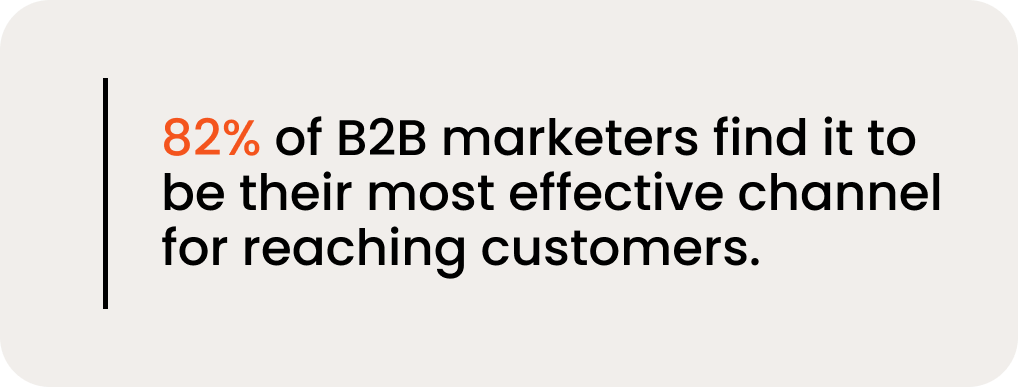
The numbers speak clearly. LinkedIn reports that 82% of B2B marketers consider it their most effective channel for reaching customers, outpacing all other business platforms.
But it’s not just about reach. LinkedIn users hold roughly twice the purchasing power of the average online audience. That makes the platform particularly suited to the lengthy, complex buying journeys typical in B2B. When face-to-face meetings or event attendance are difficult to arrange, LinkedIn bridges the gap—facilitating conversations, building trust, and paving the way to deals.
Engagement doesn’t have to be complicated. I often use LinkedIn messages to ask prospects about their challenges or why they are testing our solutions. Those brief conversations offer insights I couldn’t get elsewhere, and they often lead to valuable relationships.
Remember: the goal isn’t to “sell in the feed”. It’s to build recognition, credibility, and trust—so when the buying moment arrives, your name is already at the front of mind.
The case for personal branding
A little-known fact is that people engage with LinkedIn more than with logos. Posts from personal accounts consistently outperform those from company pages, even when those individuals have far fewer followers.
Leaders and subject-matter experts who post regularly give their brand a human voice. I’ve seen competitors lose ground with customers simply because their employees weren’t visible or active. For the past quarter, I’ve posted almost daily, and the results have been clear: stronger engagement, richer conversations, and entirely new opportunities.
One post about leadership in everyday details, for example, led to direct outreach from several executives and marketers. Daily posting might not suit everyone—but consistency is what matters. You’re already having meaningful conversations with your team each week. The key shift is deciding to share that thinking with your wider professional network.
Four practical ways to gain traction on LinkedIn
Grow your network with an afterthought
Expand your connections weekly. Standard accounts support up to 80 requests, while Sales Navigator supports 100. Please make the most of this limitation by prioritising relevance over quantity.
Be active in direct messages
Don’t see connections as the last step. Initiate conversations. A meaningful follow-up after connecting is often where the real value starts. And yes—the algorithm detects authentic interaction.
Engage and interact with your feed
Comments, thoughtful likes, and meaningful reshares show you’re part of the conversation, not just broadcasting. This also fosters reciprocity: engage with others, and they’ll engage with you.
Establish a posting rhythm—especially with video
Share insights, highlight industry trends, or unpack customer challenges. Keep the focus on creating value, not pitching. Use different formats—articles, infographics, event clips, or short videos. And on that last point: video is no longer optional. LinkedIn recently highlighted video as central to its future—launching new native video formats and emphasising expert-driven content. If you haven’t started experimenting, now’s the moment.
The surprising wins
One of the most exciting things about LinkedIn is how it presents opportunities you weren’t even searching for.
A while ago, I shared a post about how AI could revolutionise content discovery and personalisation in B2B. A sales director at a global firm contacted me after reading it. Their industry and type of company hadn’t been on my radar. However, our conversation showed how they were struggling to make decades of technical content accessible to customers and sales teams.
That single LinkedIn exchange sparked a new dialogue about how our solutions could support knowledge-sharing in complex industries—an opportunity we might never have found through traditional outreach.
That’s the real beauty of LinkedIn. It’s not about vanity impressions or self-promotion. When used correctly, it becomes a discovery tool: for feedback, for relationships, and for entirely new business opportunities.
Your long-term investment
LinkedIn is more than just another social channel—it's the most essential platform for B2B professionals. It serves as a platform for gaining mindshare, initiating relationships, and shaping long-term opportunities.
The payback doesn’t always happen overnight. But every thoughtful post, every direct message, and every interaction plants a seed. When your prospects are finally ready to buy — weeks, months, or even years later — you’ll be the one they already trust.
For more insights like this:

