
- Learn
- The B2B Enablement Hub
- Thirteen years of The Onlinification Hub (2012–2025)

Since 2012, the Onlinification Hub has grown alongside the B2B digital landscape to learn what resonates with the target group. This article looks at what resonated with readers in 2025 and how relevance and personalisation have become central to earning attention.
Thirteen years of learning how to be relevant in B2B.
How do you share knowledge in a way that is genuinely useful?
From publishing more to publishing with intent.
In 2025, the focus shifted towards relevance through personalisation.
One of the most important developments this year was a stronger emphasis on relevance through personalisation and localisation.
Not every reader comes to The Onlinification Hub with the exact needs. Decision-makers often seek perspective, context, and confidence in their choices. Change managers need guidance for translating strategy into action across organisations. Practitioners tend to look for practical insight they can apply immediately.
At the same time, our audience has become increasingly international, reflecting both our own reach and that of the customers we work with. In 2025, the Onlinification Hub expanded into Dutch, German, and French, allowing us to better serve local markets with content that feels relevant not only by role but also by language and context.
These changes mirrored the challenges that many of our customers are currently facing—global businesses with local realities. The shift towards localisation was therefore not just a publishing decision but a reflection of how relevance works in practice.
What readers found worth reading in 2025
What was the most-read article on The Onlinification Hub in 2025?

The article addresses a familiar yet unresolved challenge in B2B: how brand and demand generation are often treated as separate efforts, even though they are closely connected. The robust readership indicates a desire for more comprehensive thinking that mirrors the actual process of buying decisions.
Why did AI content resonate with readers?

Does experimentation still matter?
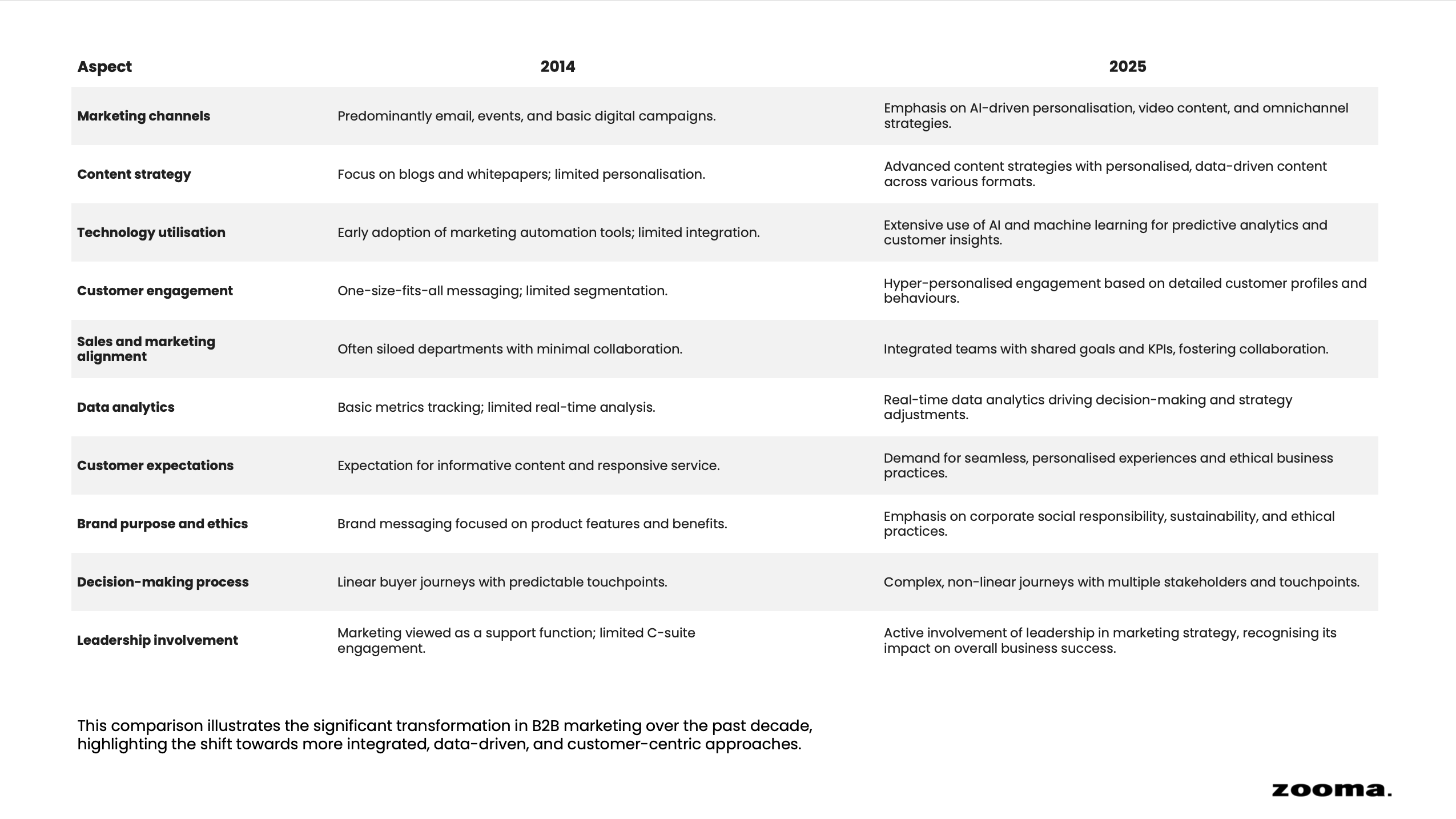
How has B2B marketing changed over time?
What insights from industry events felt worth distilling?
A consistent pattern
Content earns attention when it acknowledges the reader’s reality. The articles that resonate most tend to explain rather than impress. They avoid overstating conclusions, leaving room for interpretation and reflection. They aim to support better thinking rather than provide definitive answers.
This aligns with how B2B audiences increasingly engage with content today: selectively, critically, and with limited time.
Looking ahead
As automation and AI continue to transform content production, relevance is becoming the most crucial filter for determining what content is valuable. Not how much is published, but why it is published.
That principle has guided the hub since 2012, and it remains as relevant as ever as we head into what comes next.
Thank you to everyone who continues to read, reflect, and contribute to the ongoing conversation.
As we look forward to another year, we’re excited to bring you more thought-provoking articles, expert opinions, and actionable tips. If you want to stay updated with the latest from the Onlinification Hub, remember to subscribe.

