Thoughts, facts, and knowledge
The B2B Enablement Hub
 Alexander Evjenth
 Anna Jodlovsky
 Carl Wåhlander
 Cecilia Langenius
 Charlotte Björsjö
 Daniel Falk
 Dora Meleg
 Doug Bolton
 Elin Salekärr
 Elisabet Isacchi
 Fabian Zetterberg
 Floriane Bérain
 Fredrik Abrahamsson
 Hans Oskar
 Ingrid Wallgren
 Jakob Thornér
 Joel Hernestål
 Jonas Ydkvist
 Jorik Boot
 Louise Waern
 Mark Hooley
 Martin Ray
 Mattias Granat
 Nils Munk Wirell
 Niyat Ghebremichael
 Per-Henrik Persson
 Peter Ishii
 Qarin Lövgren
 Sofia Hermansson
 Sofie Holmkvist
 Stellan Björnesjö
 Tobias Pasma
 Victor Longon
 Yeu-Kang Hua
 Yvonne Ehinger
Page 2 of 25
Can we speak to references before signing, and what should we ask them?
Yes. We arrange reference conversations with clients in a comparable sector or project type, where the client agrees, and we encourage it. Tell us the concern behind the request, such as implementation risk, adoption, support quality or results, and we'll match the reference to it. Then ask that reference about challenges, outcomes and how involved their own team had to be.

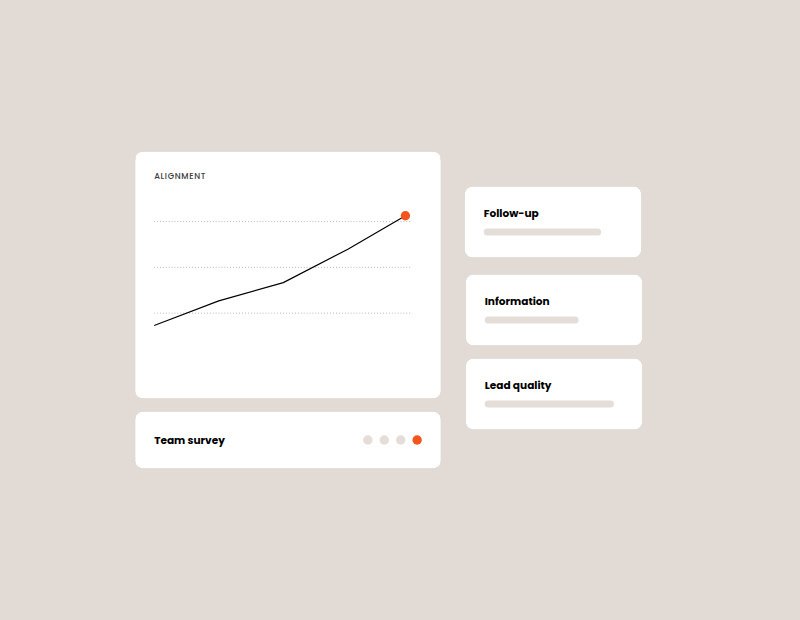
How do we measure if marketing-sales alignment is actually improving?
Measure marketing-sales alignment at the handover: how fast sales follows up on leads, whether sales gets the information it needs, and whether leads match what sales considers qualified. Add marketing's share of pipeline and a short recurring survey of both teams. Compare everything against a baseline taken before you started.
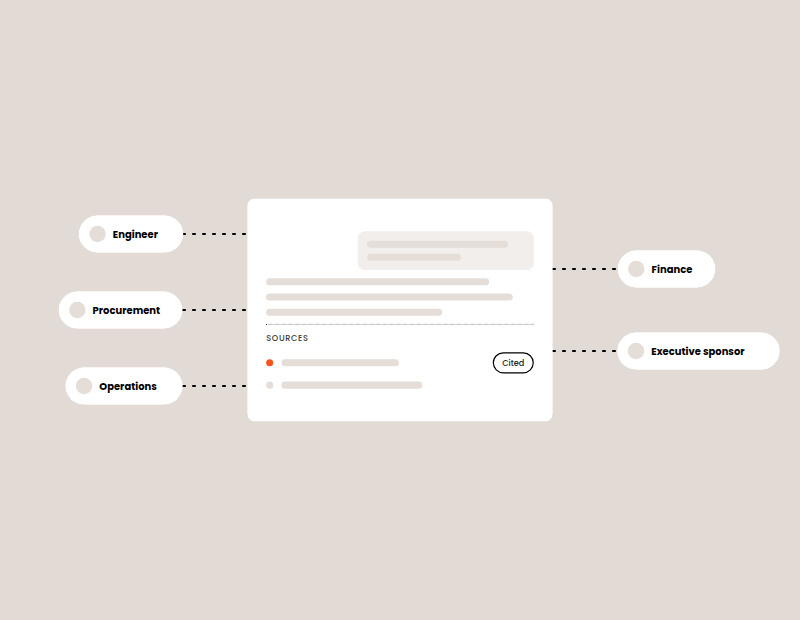
Why is inbound marketing still relevant for industrial B2B companies?
Inbound marketing is still relevant for industrial and manufacturing companies because your buyers research quietly and extensively before they contact sales. Larger buying groups and sales cycles of 6–18 months make inbound more valuable, not less: without it, you are invisible for most of the evaluation. What has changed is how inbound must be done.

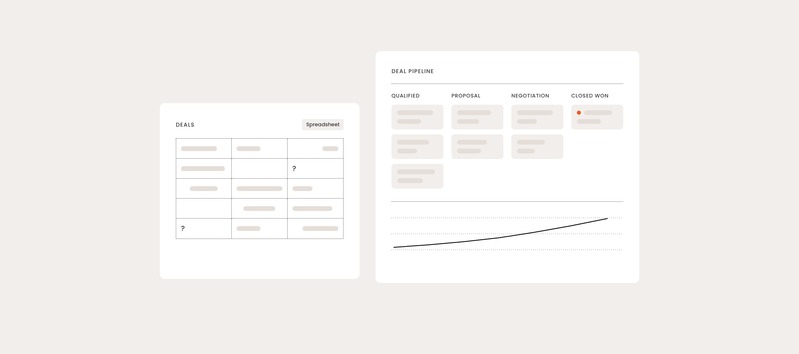
Why do so many B2B companies struggle to make HubSpot work?
Most B2B companies struggle with HubSpot because of how it was set up, not because of the platform. Instances configured without a defined sales process, a mapped buyer journey and a clear reason for sales to use them produce messy data, pipelines nobody trusts and reports nobody opens. The fix is usually deliberate architecture, not a new tool.
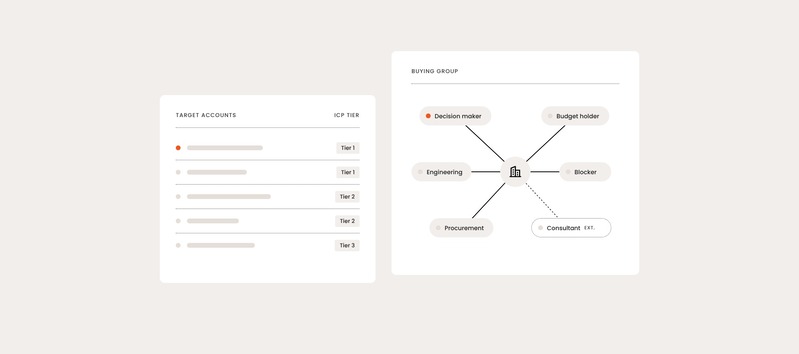
What account-based marketing (ABM) framework should a B2B company use?
An ABM framework is not a campaign type. It is a decision system for where marketing and sales invest together. The framework we use at Zooma has three parts: select accounts on ICP fit and real signals, map the buying group in each account, then engage in 1:1, 1:few or 1:many tiers, measured in the CRM sales already uses.


How do you align marketing, sales and service teams in practice?
You align marketing, sales and service by building a shared operating system, not by running a workshop. In practice, that means six steps in order: a shared view of the customer, shared definitions, one set of CRM data, defined handoffs, shared dashboards and a recurring cross-functional review. The order matters because each step depends on the previous one.

How is an enablement partner different from a typical HubSpot solutions partner?
The main difference is where the work starts. A typical HubSpot solutions partner starts with the platform and configures what you ask for. We at Zooma start with your commercial outcome and how your customers buy, then shape HubSpot to support it, push back on requests that don't, and train your team to own the result.
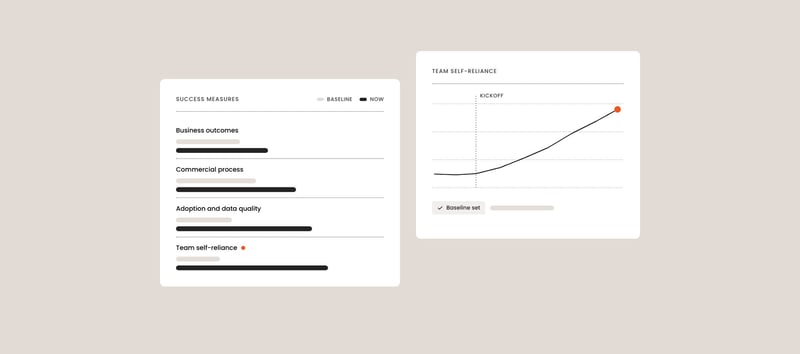
How do you measure success in a B2B enablement engagement?
Success in a B2B enablement engagement is not a delivered project. It is a measurable change in how your company wins and keeps customers. Measure it on four levels, agreed and baselined before kickoff: business outcomes, commercial process, adoption and data quality, and your team’s ability to sustain the change without outside help.
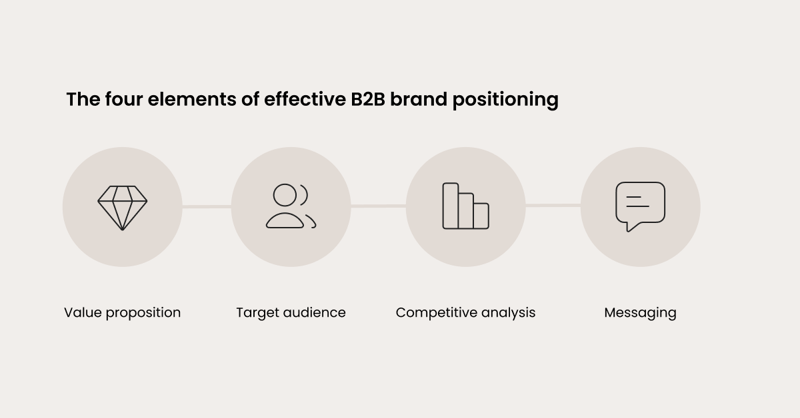
How to define B2B brand positioning that gives customers a reason to choose you
B2B brand positioning explains why a specific customer segment should choose your company over competitors or alternatives. Effective positioning combines four elements: a differentiated value proposition, a clearly defined target audience, an understanding of the competitive landscape, and consistent messaging.

Why your company's "helpful content" still doesn't get cited by AI
B2B content is harder for AI tools to reuse when key answers are buried, implicit, or poorly structured. Making those answers explicit and easy to isolate improves their extractability.
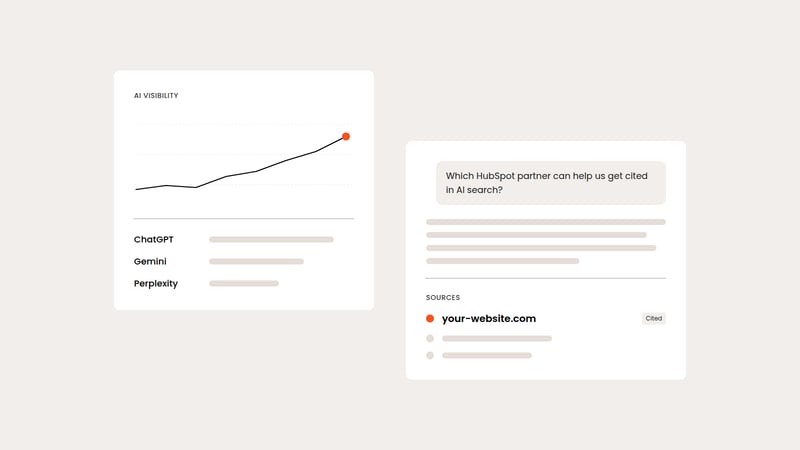
How do you measure AI search visibility in HubSpot?
Short answer: Measure AI search visibility in three layers. First, are you named in the AI answer? HubSpot AEO tracks this. Second, do people click through? The AI Referrals source in HubSpot's traffic analytics shows it. Third, do those visits become a pipeline? That is answered by tying AI referrals to contacts and deals in the CRM. Most companies only look at the second layer, and it is the least reliable of the three.

UNBOUND 2026 reflections: Why context is becoming the advantage in AI
AI capability is becoming easier for every company to access. The harder part is giving AI the context, knowledge and judgement it needs to create better outcomes. That was our biggest takeaway from UNBOUND 2026.

Your buyers are elsewhere. What should your marketing do?
Before we travelled to HubSpot's UNBOUND event in Boston, a customer asked us two questions: Is it advisable to invest in lead nurturing workflows when so much of the buying journey happens on other platforms? And while we build for AI, where, how and how much should we keep building directly for people? This article hopefully answers her and others asking the same questions.

Why “being number one” is not a B2B strategy
Being number one is not a strategy. It is an outcome. A strategy defines the capabilities, decisions, and execution required to create long-term leadership. Without those foundations, “being number one” is an ambition, not a plan.

Why ABM challenges are signals of maturity
In short, ABM challenges, scaling friction, sales misalignment, and capability gaps are usually signs that a programme is maturing, not failing. As ABM expands across more accounts, regions and teams, organisations naturally hit governance and alignment pressures that didn’t exist at a smaller scale. The organisations that treat these as renewal points, rather than red flags, are the ones that build ABM into a lasting commercial capability.